Tiếng Việt

Warehouse management system
Servo Dynamics provides smart warehousing solutions WMS – From demo to practical operation
Servo Dynamics provides smart warehousing solutions for manufacturers, distribution centers, and logistics providers in Vietnam. By combining warehouse management software (WMS), transport robots, and automated storage systems, we help businesses develop receiving, storage, picking, and shipping processes tailored to their operational needs.
When Warehouse Operations Become a Bottleneck to Growth
- Employees spend too much time walking, locating, and moving goods.
- Manual data entry can lead to inventory discrepancies, incorrect storage locations, or picking errors.
- Underutilized storage space makes it difficult to accommodate growth.
- Warehouse data and ERP/MES systems are not synchronized, making progress tracking and traceability more difficult.
Smart warehousing solutions connect material flows with data flows, helping businesses gain better control over each stage and identify opportunities for operational improvement.
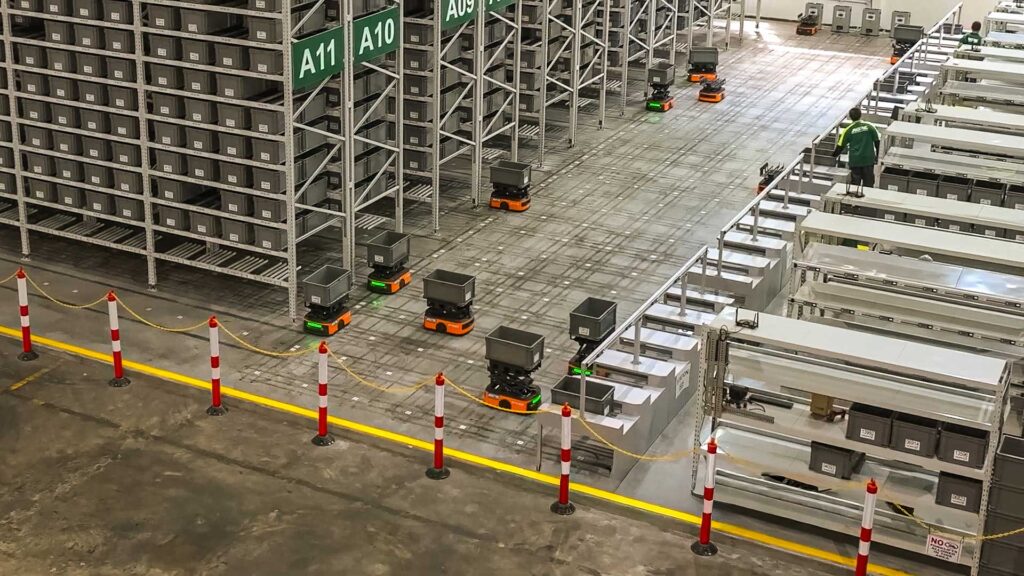
Smart Warehousing Solutions from Servo
Solution components can be deployed individually or combined into an integrated system, depending on each warehouse’s requirements.
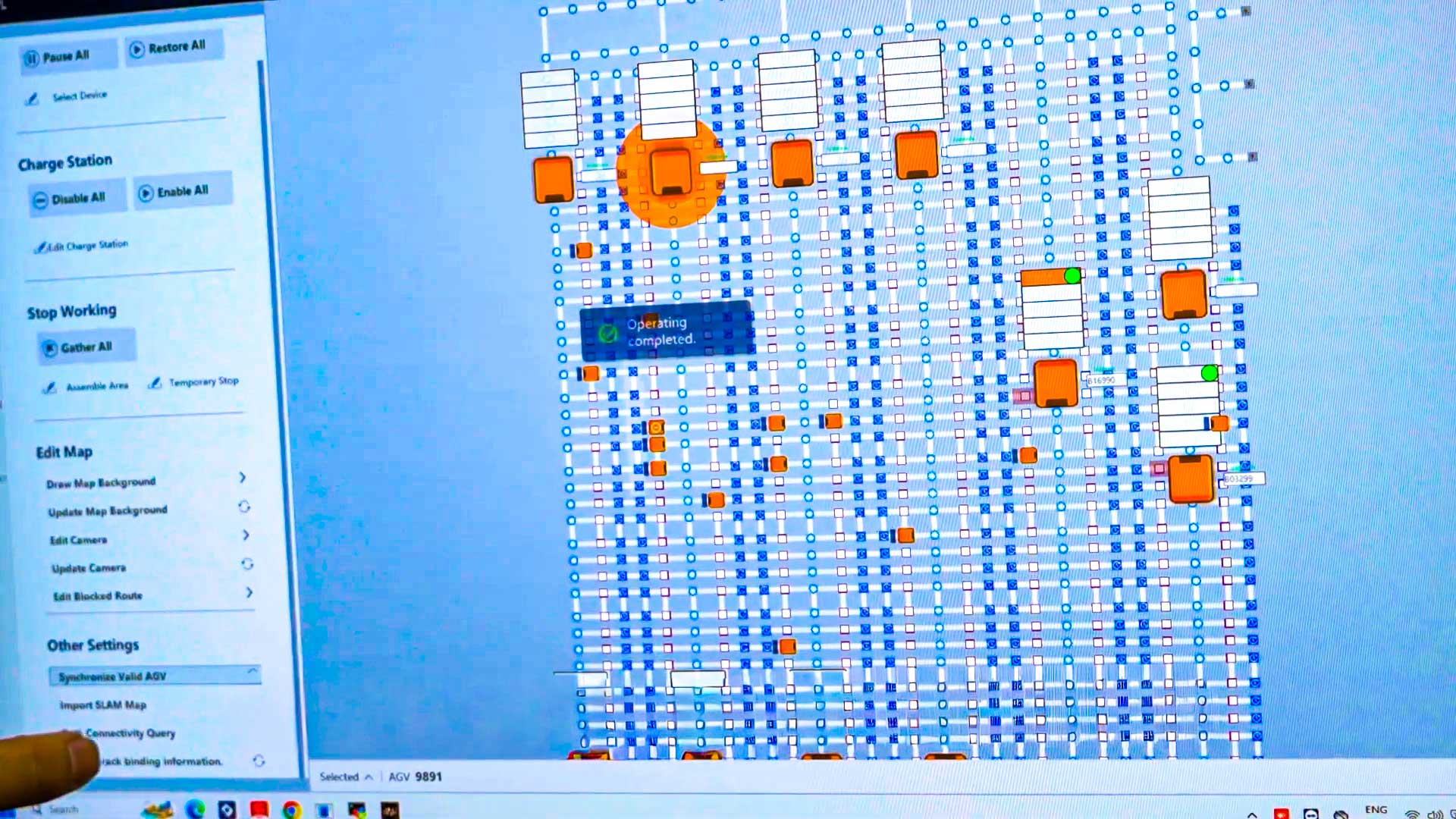
Warehouse Management System (WMS)
Digitize receiving, putaway, inventory management, picking, and shipping. WMS supports tracking of SKUs, batches, serial numbers, expiry dates, and storage locations, with barcode or RFID integration to reduce manual data entry and support traceability.
Inventory data, task status, and operational reports give management teams visibility into warehouse activities and help them address bottlenecks.
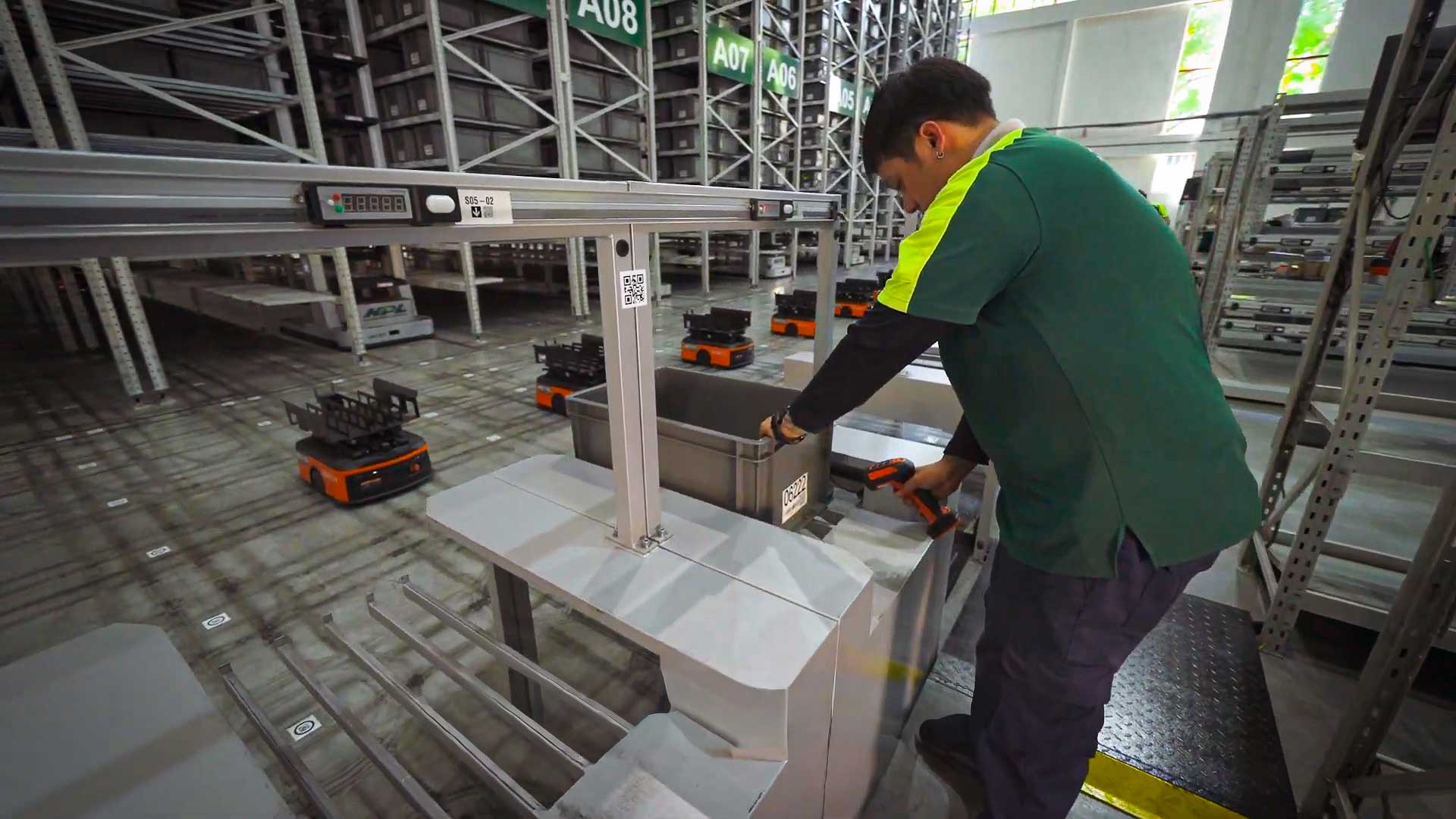
AMR/AGV Robots and Goods-to-Person Solutions
Automate internal transport between storage areas, picking stations, packing areas, and production lines. Depending on the goods and workflows, solutions may include shelf-carrying robots, tote-handling robots, pallet transport robots, or automated forklifts.
With the Goods-to-Person model, goods are brought directly to operators, allowing employees to focus on picking at their stations and reducing travel time within the warehouse.
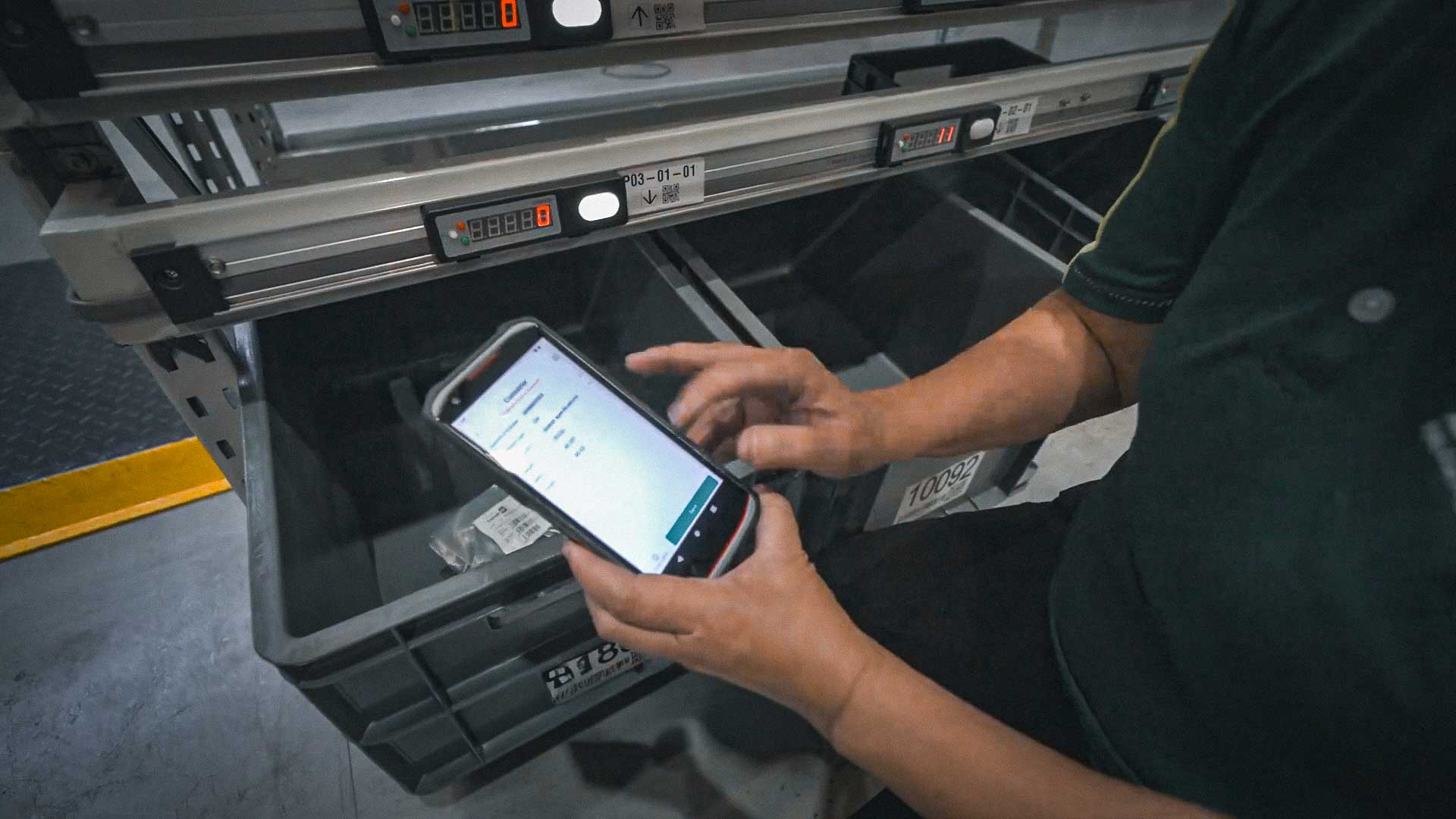
Automated Storage and Retrieval Systems (AS/RS)
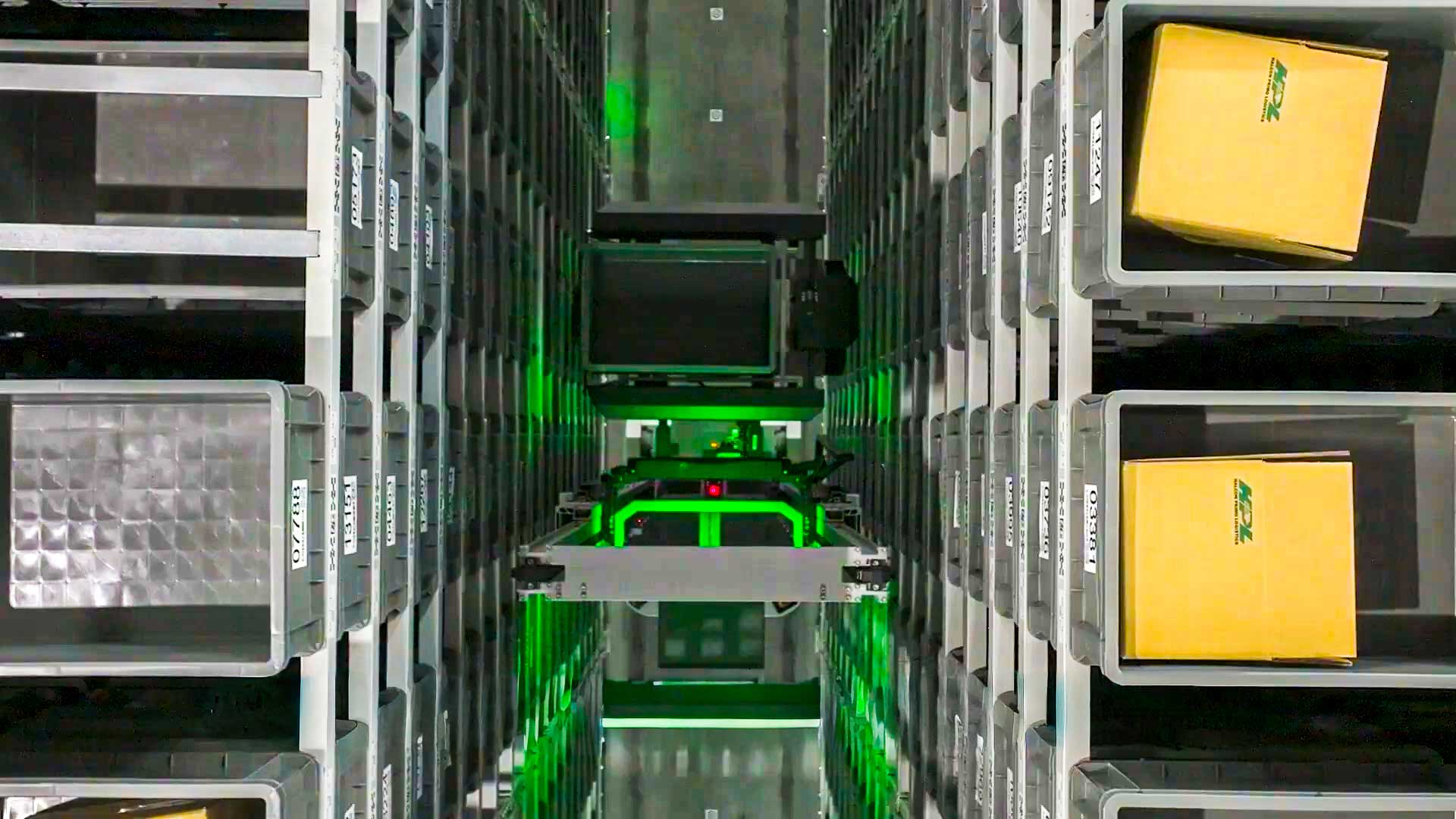
Combine racking with automated storage and retrieval equipment to utilize warehouse height, organize storage locations, and meet inbound and outbound requirements. Options include stacker crane AS/RS, miniload systems for totes and cartons, and four-way pallet shuttles for high-density storage.
Configurations are selected based on goods dimensions and weight, the number of storage locations, and required throughput.
Conveying, Sorting, and Material Handling
Connect receiving, transport, sorting, packing, and shipping processes. Conveyors and handling equipment are arranged around actual material flows and coordinated with robots and storage systems to reduce manual handoffs.
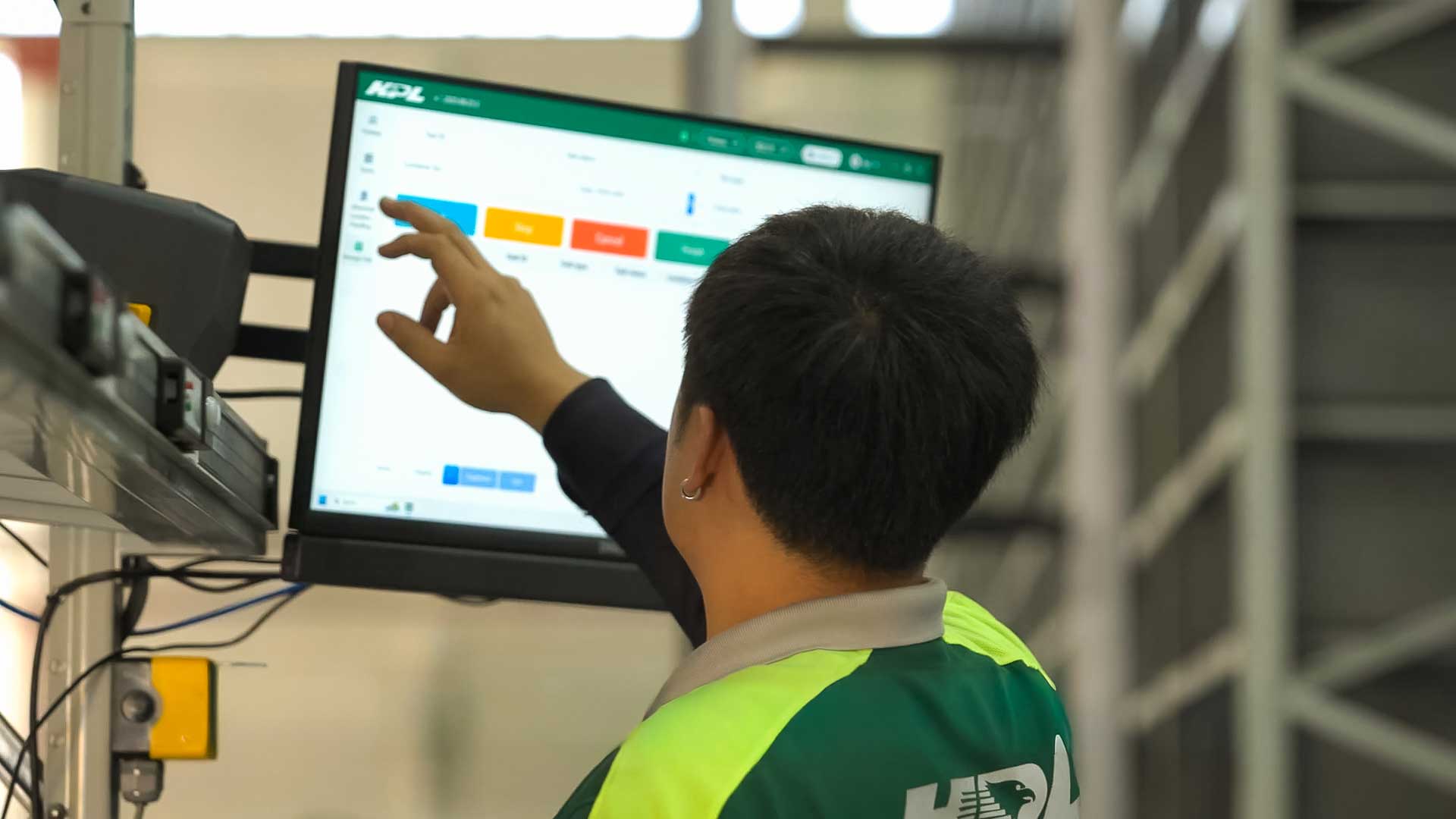
ERP/MES Integration and Equipment Coordination
Connect WMS with existing ERP/MES systems to exchange SKU data, inbound and outbound requests, and execution results. Depending on the project architecture, WES/WCS/RCS software layers work together to allocate tasks, control equipment, and manage robot fleets.
Potential Benefits for Your Business
- Improve processing efficiency: Reduce travel and waiting time between stages to help meet growing order demand.
- Enhance accuracy: Standardize goods identification, inspection, and confirmation during inbound and outbound operations.
- Optimize space utilization: Select layouts and storage technologies suited to the available floor area, warehouse height, and product characteristics.
- Gain greater control: Track inventory, locations, and task progress through the system to support traceability and decision-making.
- Scale with demand: Develop a phased investment roadmap, from digitizing workflows to automating priority processes.
Performance is evaluated against actual operating data and project-specific goals, such as order fulfillment time, inventory accuracy, throughput, and space utilization.
Reference Case Study: HPL Automates Tote Handling with Hikrobot
Halcon Primo Logistics (HPL), a logistics services provider in Singapore, needed to replace manual processes to meet increasingly large and complex order fulfillment demands.
According to the case study published by Hikrobot, HPL implemented the ToteRelayPick (TRP) solution, combining:
- 12 CTU robots: Handle vertical tote transfers between storage and buffer locations.
- 20 Q1P ToteRunner robots: Transport totes horizontally between buffer locations and workstations.
- Robot Control System (RCS): Connects with HPL’s WMS and ERP to coordinate operations and digitize warehouse data.
Hikrobot reports that the solution helps HPL process orders faster, reduce errors, and improve warehouse visibility. Its flexible configuration also supports expansion as operational demand grows.
The HPL case demonstrates how storage-handling robots and transport robots can work together to organize material flows in a high-density warehouse.
Source: Hikrobot × HPL case study in Singapore, presented as a reference application.
Why Choose Servo Dynamics?
- An operations-focused approach: Assess material flows, data, and target throughput to select suitable technologies.
- Software and equipment integration: Develop a solution approach spanning warehouse management, transport, storage, and automation control.
- Local support in Vietnam: Facilitate technical discussions and coordination with project stakeholders.
- A phased investment approach: Prioritize processes that need improvement while considering future integration and expansion.
Start with Your Warehouse Data
- Discuss your requirements: Identify current challenges, throughput targets, and growth plans.
- Assess current operations: Review the layout, product range, inbound and outbound volumes, and existing software systems.
- Propose a solution: Select software, robot, and storage configurations; define the integration scope, evaluation criteria, and estimated budget.
- Agree on a roadmap: Develop a plan for implementation, testing, training, and go-live within the project scope.
Find the Right Warehouse Solution for Your Business
Looking to reduce manual transport, improve inventory accuracy, or increase storage capacity? Share your challenges with Servo Dynamics to explore a suitable solution.
To get started, you can send us your warehouse layout, goods dimensions and weight, SKU count, inbound and outbound volumes, and details of your existing ERP/WMS systems. If some data is not yet available, the Servo team will discuss your needs with you in more detail.
Frequently Asked Questions About Smart Warehousing Solutions
Businesses can consider implementing WMS, barcode/RFID identification, or automation of a single transport route before expanding further. The specific approach depends on the layout, racking structure, floor conditions, and existing workflows.
Businesses can invest in phases. Whether to prioritize inventory digitization, automated transport, or storage should depend on the processes causing delays and the business objectives.
WMS can integrate with ERP/MES systems within an agreed scope. The technical team needs to assess connection interfaces, data structures, and the business processes requiring synchronization before confirming an integration approach.
Costs and timelines depend on the number of storage locations, types of goods, required throughput, equipment quantities, and level of integration. Servo will review the input data with you to propose a suitable configuration and roadmap.