Tiếng Việt
Consulting, Industrial Automation, News, Solutions
What is a Robot Gripper? Types of Grippers Used in Manufacturing
What are Robotic Grippers?
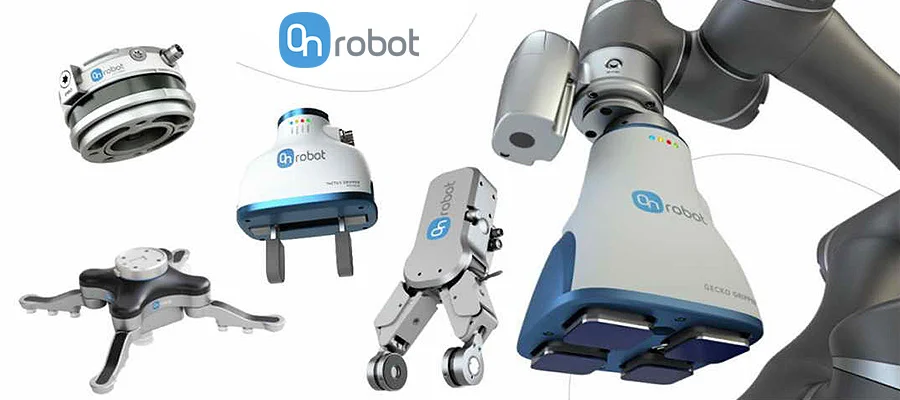
Definition of the End Effector / Gripper
A robotic gripper (also known as the End of Arm Tooling – EOAT, or End Effector) is a peripheral device mounted on the final flange of an industrial robot arm or collaborative robot (cobot). The gripper serves as the direct contact point between the robot and the working environment. Its core function is to emulate the human hand or specialized tools to perform physical manipulations such as gripping, holding, releasing, rotating, or applying force to objects (workpieces) within the manufacturing process.
In short, while the robot arm provides strength and reach, the gripper is the tool that determines the specific capability and dexterity of the automation system.
The Role of the Gripper in Industrial Robotics
The gripper plays a pivotal role in transforming a general-purpose robot arm into a specialized automation system:
- Precise Material Handling: From moving ultra-small electronic chips (micron-scale) to handling heavy boxes weighing tens of kilograms, the gripper ensures materials are handled safely and placed in the correct position.
- Supporting Complex Assembly Processes: In assembly, the gripper not only holds components but can also integrate force sensors to feel and adjust position, ensuring parts mesh without causing damage (e.g., precise mechanical component assembly).
- Efficient Machine Tending: The gripper continuously performs loading and unloading of workpieces, maximizing the uptime of expensive processing machines such as CNC machines and injection molding machines.
- Measurement and Inspection: Combined with other EOAT tools like smart cameras or sensors, the gripper helps the robot perform automated and objective quality checks.
General Structure of a Robotic Gripper
Despite design differences, a typical gripper usually consists of four main components:
- Jaws / Fingers: This is the part that contacts and holds the object. Fingers can be standard metal jaws (2-finger, 3-finger) or customized soft pads designed for the workpiece’s shape and material. The friction of the finger material is a crucial factor.
- Actuator: This is the power source that drives the opening/closing mechanism. The actuator determines the gripping force, response speed, and control capability of the gripper.
- Pneumatic/Hydraulic: Uses a piston and cylinder to convert pressure energy into linear motion. Advantages include large instantaneous torque but difficulty in precisely controlling intermediate positions.
- Electric (Motorized): Often uses servo or stepper motors combined with a ballscrew or gear mechanism. Servo motors provide precise, closed-loop control over position, speed, and gripping force, which is essential for applications requiring gentle force or continuous travel adjustments.
- Sensors and Feedback Systems: Sensors provide real-time data so the robot can adapt to the environment.
- Position Sensors: Typically an integrated encoder in electric grippers or proximity/Hall effect sensors in pneumatic grippers, helping to accurately determine the open/closed position of the jaws.
- Force/Torque Sensors: Mounted on the robot wrist or directly on the jaws. They measure the force applied to the workpiece, allowing the robot to adjust the gripping force via closed-loop control, especially vital when handling fragile materials (e.g., assembly with tight tolerances).
- Vision Systems: Integrated 2D or 3D cameras on the EOAT allow the robot to recognize and locate workpieces not in fixed positions (Bin Picking), or perform quality inspection immediately after picking.
- Tactile Sensors: A newer development, using a matrix of pressure sensors on the jaw surface to “feel” the shape, texture, and slippage of the workpiece, increasing reliability in unstructured environments.
- Mounting Flange & Interface: Includes the mechanical flange for mounting to the robot and electrical/communication ports (such as Ethernet, Modbus, Profinet, IO-Link) for the robot to send control commands and receive feedback data from the gripper.
Functions and Benefits of Using Robotic Grippers
Implementing robotic grippers is not just about automation, but about optimizing the overall manufacturing process:
Automating Repetitive Tasks
Freeing human workers from monotonous, repetitive, or physically straining tasks (RSI). This allows human resources to be shifted to tasks requiring complex thinking or quality supervision.
Increasing Production Speed – Reducing Errors
Robots maintain consistent operating speeds 24/7. Thanks to their high positional accuracy (typically below 0.1 mm) and fast response times, robotic systems significantly reduce errors caused by positional inaccuracy or inconsistent gripping force.
Ensuring Safety – Reducing Direct Contact
Robotic grippers are ideal for hazardous environments such as high-temperature areas (furnaces), toxic chemical contact areas, or heavy machinery operations, ensuring worker safety.
Enhancing Product Uniformity
Consistency in gripping force and workpiece placement according to the program eliminates quality variations often seen in manual labor, thereby improving the uniformity and quality of the product output.
Flexible Integration with Various Robots
Modern EOAT solutions, such as the OnRobot product line, are designed under the “One-System Solution” principle, enabling plug-and-play mechanical and software integration with over 14 leading robot brands (Universal Robots, Fanuc, ABB, etc.).
Popular Types of Robotic Grippers Today
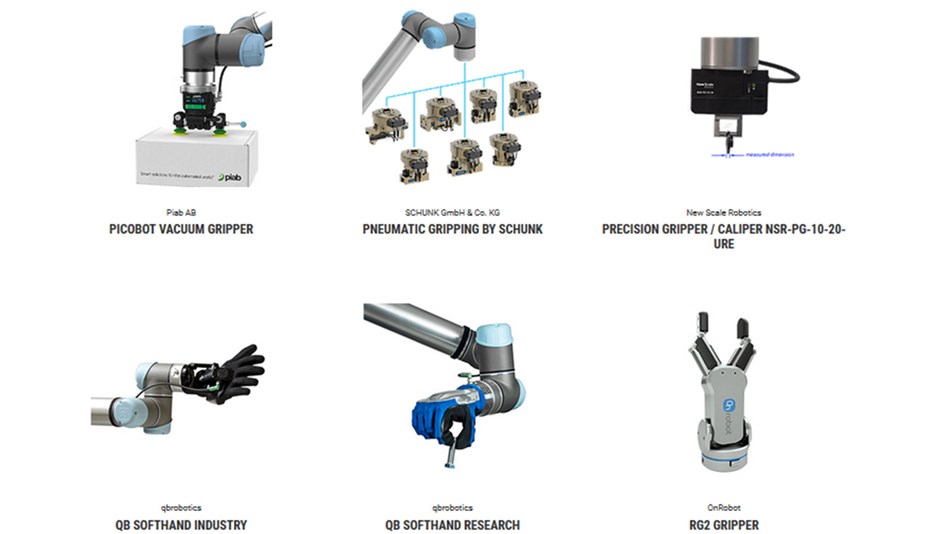
Classifying robotic grippers by actuation mechanism is the most common approach because it directly influences performance, cost, and flexibility.
1. Pneumatic Grippers
- Principle: Uses compressed air supplied from an air compressor, converting air energy into linear or angular motion via a piston.
- Advantages: Extremely high gripping force relative to size (high gripping power), simple construction, high durability, low initial investment cost, and very fast opening/closing speed.
- Disadvantages: Difficult to flexibly control gripping force (usually only open/closed state with fixed force), requires a stable compressed air system, and generates noise.
- Applications: High-speed Pick & Place, Machine Tending requiring strong gripping force, or rough applications.
2. Electric Grippers
- Operation: Powered by stepper or servo motors, transmitting force through ballscrew or gear mechanisms.
- Precision and Control: This is the biggest advantage. Electric grippers offer absolute precision position (travel) and gripping force control (Closed-loop control). They can stop at any position and apply the programmed gripping force.
- Suitable For: Delicate assembly (e.g., electronic components, medical devices), handling multiple workpieces of varying sizes without changing jaws (flexible automation).
- Disadvantages: Gripping force is usually weaker than pneumatic grippers of the same size, and the cost is higher.
3. Hydraulic Grippers
- Gripping Force: Uses high-pressure hydraulic fluid (oil). This type of gripper has the highest gripping force (very large, potentially tons), and the force does not degrade over time.
- Used In: Heavy Duty manufacturing environments, handling casting, forging workpieces, hot metal processing, or extremely large and rigid materials.
- Disadvantages: Requires a complex pump system and oil reservoir, prone to oil leaks (affecting the working environment), high maintenance costs, not suitable for cleanrooms.
4. Vacuum Grippers
- Principle: Creates a pressure differential by sucking air out of the contact area between the suction cup and the object, using atmospheric pressure to hold the object.
- Classification & Applications:
- Single-cup/Multi-cup: Used for small items or when high flexibility is needed.
- Large-area Vacuum Pads (Large-area Gripper): Suitable for loading/unloading goods onto/from pallets (palletizing), handling large sheet materials (glass, metal sheets, wood panels), or porous lightweight cardboard boxes.
- Bernoulli Grippers (Non-contact): Use a high-speed airflow to create a vacuum without physical contact, ideal for silicon wafers, or very fragile materials.
- Advantages: Low cost, can handle objects with uneven surfaces or those placed slightly askew.
5. Magnetic Grippers
- Used For: Specifically designed to grip and move ferrous metal parts (ferromagnetic materials).
- Classification & Control:
- Electro-magnetic: Turns magnetism on/off using electrical current. Allows precise and flexible control of workpiece release. This is the most common type.
- Permanent Magnet: Very strong gripping force but requires a mechanical mechanism or electrical pulse to demagnetize and release the workpiece.
- Applications: Handling metal sheets, stacking flat metal workpieces, operating in oily environments where mechanical clamping might slip.
6. Soft Grippers
- Characteristics: Uses elastic materials (silicone, rubber) and often operates with low air pressure to deform the gripper’s structure. Capable of enveloping and self-adjusting to the object’s shape.
- Specialized Use: Food industry (fruits, vegetables, confectionery), pharmaceuticals, soft packaging, or any product with a soft, easily deformable, or fragile surface. Soft grippers simulate the dexterity and gentleness of the human hand.
7. Application-Specific Grippers
These are specialized designs to address non-standard gripping requirements, including:
- 3-Finger, 4-Finger Grippers: Used to grip round or cylindrical objects. 3-finger grippers provide excellent Self-Centering capability and higher stability than 2-finger grippers.
- Specialized Fingers: Fingers are 3D-printed or specially machined with precise contours and grooves to match the complex shape of the workpiece, optimizing gripping force at the contact points.
Classification of Grippers by Motion Mechanism
Classification by motion determines how the gripper holds the object:
Parallel Grippers
Two fingers move along a parallel axis, suitable for gripping objects with flat surfaces, rectangular shapes, or workpieces with variable sizes.
3-Jaw Grippers
Three fingers simultaneously move toward the center, creating excellent self-centering, ideal for gripping round objects, cylinders, or tubes.
Angular Grippers
The fingers rotate at an angle to grip the object, typically 30°, 45°, or 90°. This type is used when the robot needs to pick up a workpiece from an angle or needs to quickly clear the space above the object.
Rotary Grippers
The gripper integrates the ability to rotate the workpiece horizontally while holding it, used in assembly applications or adjusting workpiece orientation.
Hybrid Grippers
Combines two or more mechanisms (e.g., a parallel gripper with integrated vacuum suction on the fingertip) to increase flexibility and the ability to handle diverse workpieces.
Key Criteria When Choosing a Robotic Gripper
Selecting the right gripper is a complex technical decision, requiring a detailed evaluation of the following criteria:
Gripping Force and Friction Calculation
- Force Requirement: The necessary gripping force (F_grip) must overcome the sum of gravitational force (F_gravity) and inertial forces (F_inertia) generated by the robot’s acceleration and abrupt stopping.
- Simple Formula (Basic Principle): The minimum gripping force must be large enough to hold the object without slipping during movement. This force depends on the object’s mass (m), the robot’s maximum acceleration (a_max), gravitational acceleration (g, approximately 9.81 m/s²), the coefficient of friction between the gripper finger and the object (μ), and the number of contact fingers (N). It must be ensured that the gripping force is greater than or equal to (m * (a_max + g)) / (μ * N).
- Safety Factor: To ensure absolute safety, the chosen gripping force usually includes a Safety Factor of 1.5 to 3 times the calculated minimum force.
Payload
The total weight of the gripper plus the workpiece must be within the allowable payload limit of the robot arm to ensure performance and longevity.
Jaw Travel and Repeatability
The maximum travel range of the jaws must encompass both the smallest and largest workpiece sizes the robot will handle. Positional accuracy and gripper repeatability (typically < 0.05 mm) are mandatory requirements for micro-component assembly or automated welding applications.
Opening/Closing Speed
This speed directly affects the Cycle Time. In mass production lines, fast speed (often pneumatic grippers) is the top priority.
Workpiece Material & Shape
- Hard/Metal Workpieces: Usually use mechanical grippers (pneumatic, electric, hydraulic) with steel or aluminum fingers.
- Soft/Food Workpieces: Require Soft Grippers or vacuum.
- Sensitive Surface Workpieces: Require grippers with force sensors and soft, high-friction finger material (e.g., rubber, silicone).
Working Environment: Dust, Oil, Temperature, Humidity, and Clean Standards
- IP Rating (Ingress Protection): Classifies the degree of protection of the gripper casing against solid dust and liquids. IP65 is the minimum for general industrial environments. IP67 is necessary for applications involving contact with liquids (washing, cooling). IP69K is the highest standard, often used in the food/beverage industry requiring high-pressure, high-temperature washing.
- Cleanroom: The gripper must comply with ISO 14644-1 standards (e.g., ISO Class 5 or lower), requiring non-abrasive materials, no dust generation (especially sealed electric grippers or non-contact vacuum grippers – Bernoulli), and no air exhaust.
Robot Compatibility (UR, ABB, Yaskawa, Fanuc…)
The gripper must be compatible both mechanically (flange) and electronically (I/O communication, software). Plug-and-play solutions (like OnRobot’s One-System Solution) help reduce integration time from weeks to just a few hours.
Applications of Robotic Grippers in Manufacturing
Robotic grippers are the backbone of automation, used in many applications:
Pick & Place
The most common application, from moving bottles and boxed products on a conveyor belt to sorting components within a machine.
Packaging – Palletizing
Using vacuum grippers or large-area grippers to load/unload cardboard boxes onto pallets according to a predetermined pattern, optimizing storage and transport space.
Component Assembly
From assembling plastic parts in household appliance manufacturing to mechanical components in the automotive industry.
Material Handling
Handling heavy materials and raw workpieces in the initial stages of the machining process.
Welding – Metal Processing
Robots use specialized end-effectors (not grippers) such as welding torches, paint spray guns, or abrasive tools.
Electronics, Food, Automotive Manufacturing
Each industry has specific requirements for gripping force, cleanliness, and speed, leading to the selection of the appropriate gripper type.
Popular Robotic Gripper Brands
Leading global brands in the End of Arm Tooling (EOAT) sector include:
- OnRobot: Specializes in Plug-and-Play EOAT solutions for cobots and light-duty robots, known for flexibility and ease of integration.
- Schunk: Offers a wide range of products, from pneumatic and electric grippers to large gripping systems for heavy industrial robots.
- SMC: A major pneumatic brand, providing a diverse range of pneumatic and vacuum grippers.
- Zimmer: Focuses on robust and durable gripping solutions for heavy industry and machine tending.
- Robotiq: Famous for its smart 2-finger and 3-finger adaptive grippers, integrating force sensors.
- Destaco & Gimatic: Provides clamping solutions and tools for specialized applications.
Tips for Choosing the Right Gripper for Each Application
To choose the correct gripper, start by answering the following questions:
- Gripping Force and Speed: Do you need strong gripping force and high speed (accepting rough control) or precise control over force and position (accepting moderate speed)?
- High speed, high force → pneumatic gripper.
- Precise assembly, force control needed → electric gripper.
- Workpiece Characteristics: Is the workpiece hard or soft? Flat or curved?
- Heavy, rigid workpiece, harsh environment → hydraulic / magnetic.
- Thin, sheet, cardboard boxes, flat surfaces → vacuum.
- Food, soft packaging, easily deformable products → soft gripper.
- Flexibility: Do you handle only one type of workpiece or multiple sizes? Electric and Soft Grippers are generally more flexible.
What are the types of end effector?
The term ‘end effector’ (or ‘End-of-arm Tooling’ (EOAT)) is used to describe any device attached to the end of a robot arm. Grippers are one type of end effector, but there are many others. For example, a smart camera attached to the end of a robot arm could be used to help with inspection tasks. Or a welding tool end effector could be attached to a cobot and used to safely automate welding tasks.
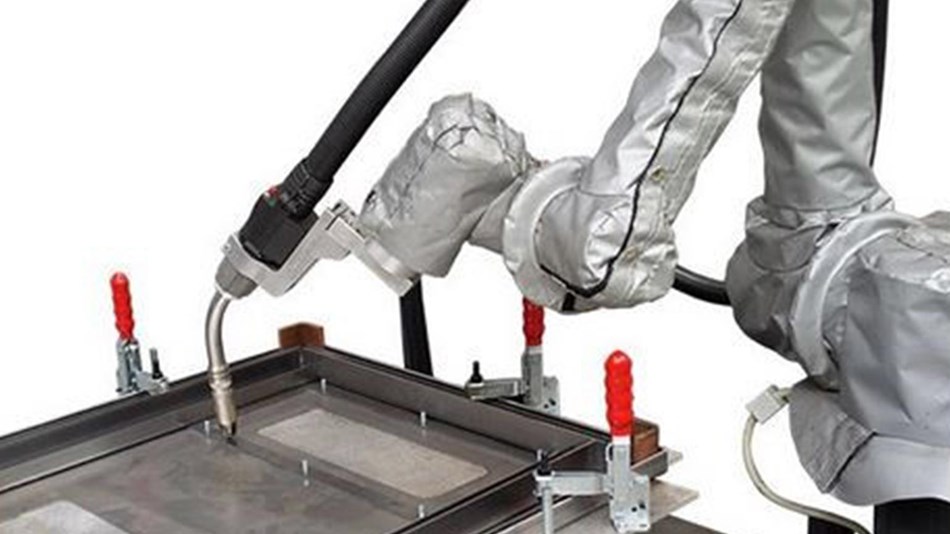
The UR Olympus welding system with end-of-arm welding tools is ideal for simple welding applications.
Source: https://universal-robots.com/
Onrobot – Leading Gripping Solutions for CobotsOnrobot is a leading brand in providing gripping solutions and end-of-arm tools (EOAT) for collaborative robots (cobots). OnRobot’s innovative products — including grippers, sensors, and tool systems — are designed to boost productivity and efficiency across applications such as assembly, packaging, and material handling. Their user-friendly solutions enable quick integration with various robot platforms, making automation more accessible across industries ranging from manufacturing to logistics and beyond.
Explore Onrobot’s Products
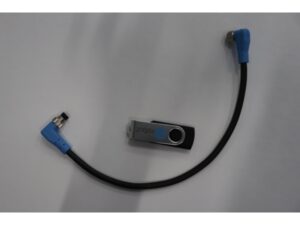
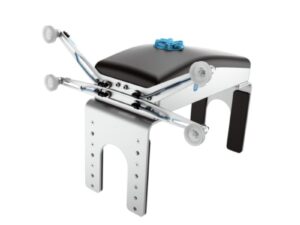
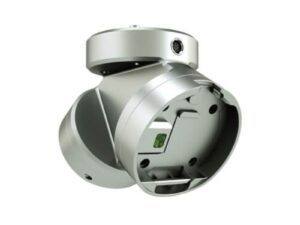
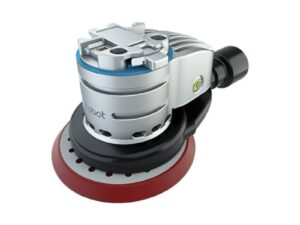
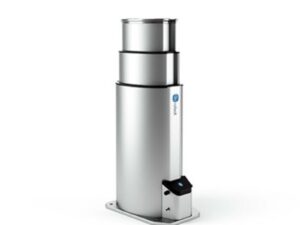
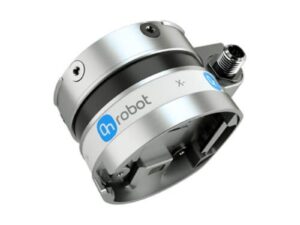
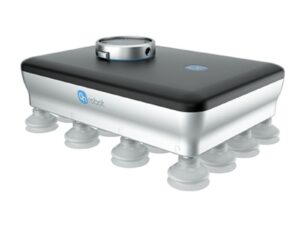
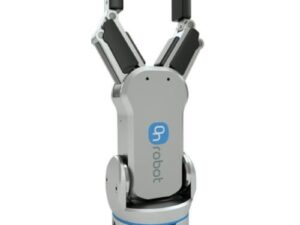
Servo Dynamics Engineering: Officially Authorized Distributor of OnRobot in Vietnam
OnRobot is a world-leading brand, specializing in providing plug-and-play EOAT and gripping solutions for collaborative robots (cobots). With the One-System Solution philosophy, OnRobot products, including grippers, sensors, and tool systems, are designed for easy installation and programming across all major robot platforms, helping businesses enhance productivity and automation efficiency in a short amount of time.
Servo Dynamics is the officially authorized distributor of OnRobot in Vietnam. We are committed to providing the full range of advanced EOAT products, along with a team of experienced engineers, offering consulting, implementation, and in-depth technical training to ensure your business utilizes collaborative robots effectively and optimally.
Contact Servo Dynamics Engineering now to explore optimal automation solutions from OnRobot, meeting all the most stringent requirements in manufacturing!
Learn More
OnRobot – Provider of End-of-Arm Tools and Accessories for Collaborative Robots
About OnRobot OnRobot was founded in 2018 with the mission of breaking down automation barriers [...]
Dec
OnRobot| Slashing Sanding Time by 80% at EsVata Shutters
Wooden plantation shutter manufacturer boosts competitiveness, output, and quality with a combination of Flexiv Rizon [...]
Dec

Servo Dynamics Vietnam Participated OnRobot APAC Annual Sales Meeting 2020
Date : 06th Feb 2020 Venue : Shangri La’s Rasa Sayang, Penang, Malaysia. Award were [...]
Feb
Robotic Palletizing System Tackles Labor Shortages at Magic Valley Produce
Modernizing Idaho Agriculture Did you know that Idaho is not only famous for its stunning [...]
Nov