Tiếng Việt
Consulting
What is a Fire Alarm Strobe? Definition, Construction, and Functions
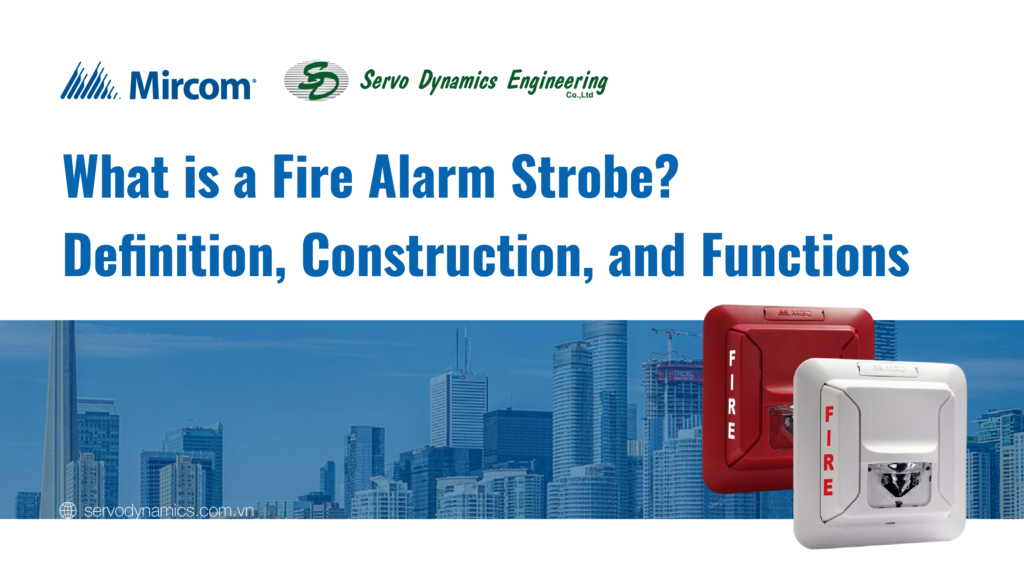
In modern fire protection systems, the fire alarm strobe (or fire alarm light) serves as a critical link in emergency communication. Far from being just a simple flashing bulb, this device is engineered to meet rigorous technical standards to ensure visibility under the most extreme conditions. This article provides a comprehensive look at the construction, operating principles, and installation standards for fire alarm strobes today.
What is a Fire Alarm Strobe?
Definition of Fire Alarm Strobe
A Fire Alarm Strobe (or Visual Indicator) is a peripheral device within a fire alarm system designed to convert electrical signals from the fire alarm control panel into light signals to warn occupants of a fire emergency.
In an automatic fire alarm system, strobes are typically installed alongside bells or horns. Their role is vital for:
- Hearing-Impaired Individuals: Those who cannot hear audible bells or sirens.
- High-Noise Environments: Factories, mechanical workshops, or clubs where alarm sounds may be drowned out.
- Low-Visibility Conditions: High-intensity flash lighting can penetrate light smoke to guide evacuation.
How Does a Fire Alarm Strobe Work?
Operating Principle:
- Detection: When detectors (smoke, heat, flame) sense a fire, they send a signal to the Fire Alarm Control Panel (FACP).
- Activation: The control panel processes the data and provides power (usually 24VDC) to the Notification Appliance Circuit (NAC).
- Illumination: The current triggers an internal oscillator circuit, causing a LED or Xenon bulb to discharge and produce synchronized flashes (strobes) at standard intervals.
Why do fire alarm lights flash? According to the NFPA 72 standard, flashing light at a frequency of 1 to 2 flashes per second (1Hz – 2Hz) captures the brain’s attention more effectively than steady light, helping people react faster during panic situations.
Common Types of Fire Alarm Strobes
Based on usage purpose and technical specifications, fire alarm strobes are categorized into:
- Strobe Lights: High-intensity lights measured in Candela (cd), used for general notification in large lobbies and hallways.
- Remote Indicators: Installed outside closed rooms (apartments, hotels). When a detector inside the room activates, this light shines red to help firefighters pinpoint the exact room in distress without checking every door.
- Location Lamps: Typically steady red lights used to mark the location of manual pull stations, fire hydrants, or extinguishers in the dark.
- Horn Strobes: Integrated units featuring both an audible siren and a visual strobe, optimizing installation space and wiring costs.
- Weatherproof Strobes: Designed with sealed enclosures rated IP65/IP66 to resist water, UV rays, and extreme temperatures for outdoor use.
Detailed Construction of a Fire Alarm Strobe
Modern fire alarm devices (such as those from Mircom) feature complex construction to ensure reliability:
Main Components of Fire Alarm Strobe
- Protective Housing: Usually made of Fire-Retardant ABS or heavy-duty Polycarbonate for heat and impact resistance.
- Lens: Engineered to distribute light evenly across the area. Lenses are typically red or transparent white.
- Light Source (LED or Xenon):
- Xenon Lamps: Provide extremely high brightness but consume more power.
- LEDs: The modern trend due to ultra-low power consumption, a lifespan of up to 100,000 hours, and low heat emission.
- Control Circuit Board: Contains electronics to synchronize flash rates and adjust light intensity (Candela settings).
- Mounting Base: Smart design for easy attachment to wall boxes or ceilings.
Light Colors and Meanings of Fire Alarm Strobe
- Red: Emergency fire warning (Fire).
- Amber/Yellow: Other emergencies such as gas leaks, technical failures, or Mass Notification messages.
- Blue: Security alerts or medical emergencies.
Functions and Practical Applications of Fire Alarm Strobe
Visual Warning and Orientation
In fire conditions, smoke often rises and darkens the space. Wall-mounted strobes at lower levels or high-intensity flashes help evacuees orient themselves toward hallways and exits through the smoke.
Zoning the Emergency
In high-rise buildings, indicator lights help management identify which floor or zone is in danger, allowing for appropriate evacuation plans and preventing congestion at stairwells.
Specialized Applications
- Pump Rooms: Indicator lights show the operational status of fire pumps.
- Chemical Plants: Use explosion-proof strobes to ensure equipment safety.
Leading Fire Alarm Strobe Brands
Mircom (Canada) – The Peak of Technology and Diverse Solutions
Mircom is a world leader with products meeting the strictest certifications such as UL/ULC and FM Approved. Mircom strobes stand out for their performance and synchronization capabilities:
- FS-400 Series (Wall Mount LED Strobes): Utilizes advanced LED technology with a thin, aesthetic “Low Profile” design for modern buildings. Key feature is ultra-low current draw, reducing the load on backup batteries.
- FHS-400-LF Series (Low Frequency Sounder Strobe): Specifically designed for sleeping areas per the latest NFPA standards. The combination unit uses a low frequency (520Hz) to wake sleepers more effectively than traditional high frequencies.
- FS-400-WP Series (Outdoor Weather Protected Strobe): The optimal solution for harsh environments like parking garages or warehouses.

Hochiki (Japan/USA) – Absolute Durability and Reliability
Hochiki is synonymous with stability over decades. Their strobes are often selected for luxury apartments and malls due to:
- Extremely high bulb lifespan and elegant design.
- Excellent compatibility with proprietary addressable fire alarm systems.
Horing & GST – Economical and Wide-Ranging Applications
For residential projects or medium-sized offices, Horing (Taiwan) and GST (China) are top choices:
- Horing: Known for affordable yet sensitive remote indicators that are easy to install and maintain.
- GST: Offers a wide product range from conventional to addressable strobes at an optimized investment cost.
Standards and Proper Installation
Installation must follow TCVN 3890 (Vietnam) or NFPA 72 (USA) standards:
Mounting Height and Position
- Wall Mount: Ideal height is 2.0m to 2.4m from the floor to the lowest point of the device.
- Ceiling Mount: Must be in an unobstructed area, away from beams or ventilation systems.
Distance and Intensity (Candela)
- In small rooms (6m x 6m), a 15cd intensity is sufficient.
- In large lobbies or long corridors, intensity from 75cd to 110cd is required to ensure light coverage.
- Note: Avoid installing high-intensity strobes too close together to prevent blinding occupants.
Common Troubleshooting
- Out-of-Sync Flashing: Caused by the absence of a Sync Module or the control panel not supporting the synchronization protocol.
- Dim or Non-Functioning Light: Usually due to voltage drop over long wiring runs. Check wire gauge or add a Power Booster.
- Ground Fault: Occurs when power wires touch the housing or are damp; requires an insulation check.
Servo Dynamics Engineering: Authorized Distributor of Mircom in Vietnam
Choosing genuine fire alarm equipment is a matter of life and death. Servo Dynamics Engineering is proud to be the authorized distributor for Mircom (Canada) in Vietnam.
We provide total solutions including:
- System design consultancy according to international standards.
- Supply of 100% genuine Mircom strobes, horns, control panels, and detectors.
- Technical support, programming, and system operation training.
Let us protect your project with the most advanced fire alarm technology from Mircom.