Tiếng Việt
Consulting, Industrial Automation
Industrial Enclosure Safety Standards: A Detailed Guide to Optimal Selection and Maintenance.
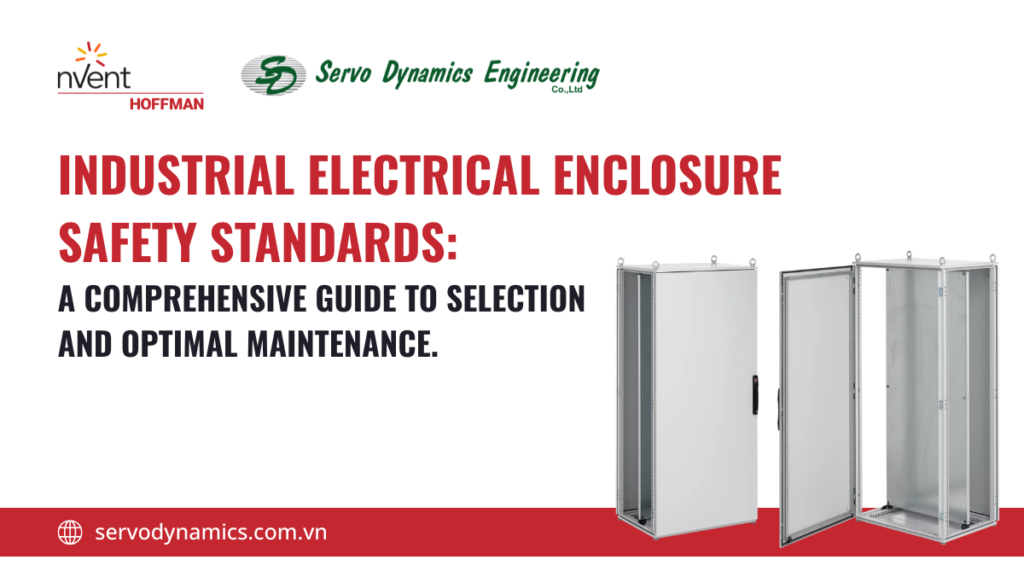
An electrical enclosure is far more than just a simple outer protective shell; it is the crucial “shield” that determines the stability of the entire internal electrical system. Gaining a clear understanding of industrial electrical enclosure safety standards is a pivotal step that helps businesses select the most compatible products for their specific operating environments.
This not only optimizes performance but also extends equipment lifespan, while minimizing the risks of damage and unexpected maintenance costs. In this article, we will explore the core standards and the secrets to maintaining long-lasting electrical enclosures over time.
General Introduction to industrial electrical enclosures
Definition of industrial enclosures:
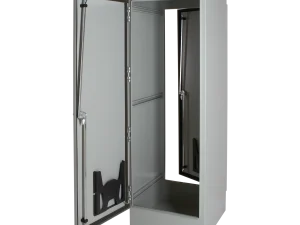
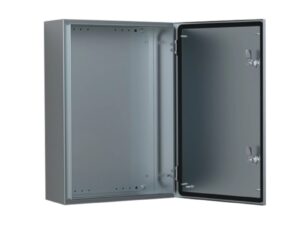
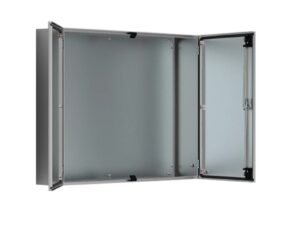
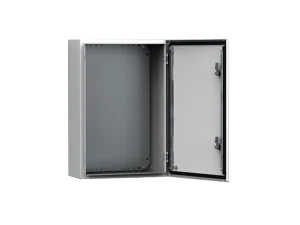
An industrial enclosure, or electrical industrial cabinet, is a specialized enclosure system made of steel or stainless steel, serving to store and protect electrical components and control circuits.
This equipment is widely used in factories, infrastructure projects, and production zones to ensure that the operation and distribution of high-power electricity take place safely and stably.
The role of industrial electrical enclosures in factory operation
- Protective function for equipment and electrical safety: A compliant electrical enclosure helps prevent harmful factors from the environment and external impacts. Electrical enclosures also help ensure occupational safety and isolate equipment carrying high voltage, especially in high-voltage electrical systems.
- Impact on system availability and OEE: An electrical enclosure with optimized heat dissipation design can prevent equipment from overheating or from electromagnetic interference (EMC), helping limit equipment downtime and keeping the production line running smoothly.
- Impact on life cycle cost (LCC) and TCO: High-quality electrical enclosure products not only can operate for a long time, but also help protect the components inside, extend equipment life, and reduce regular maintenance costs and replacement costs.
Consequences of using non-compliant electrical enclosures
Non-compliant electrical enclosures can be an indirect cause affecting both operational processes and economic efficiency
Damage to PLC/VFD/HMI equipment, production line downtime
Devices sensitive to humidity and temperature such as PLC/VFD/HMI can short-circuit or operate incorrectly if the electrical enclosure does not dissipate heat well or is water-sealed.
This causes the equipment inside the electrical cabinet to malfunction and stop unexpectedly, making the whole production line lose its production rhythm, thereby reducing overall equipment effectiveness and wasting resources.
Reduced insulation and electrical safety risks
A non-compliant electrical enclosure can cause short circuits, leakage, and arc faults due to moisture/water ingress, or machine fires due to dust, oil, hot spots, and loose connections. These incidents are causes of fire and explosion accidents in the production control department, endangering operators.
Increased OPEX/maintenance costs and legal risks
Choosing the wrong type of electrical enclosure can cause the business to spend more budget on cleaning, replacing damaged components, and handling safety incidents. These safety risks can affect the business license, and the business may face fines for safety compliance.
Electrical safety standards for industrial electrical enclosures
Electrical enclosure products can be assessed for quality and equipment protection ability by two common standards: NEMA standards and IP standards.
IP standard (Ingress Protection)
Overview of the IP Ratings
The IP Ratings is used to evaluate a device’s ability to prevent the intrusion of liquid and solid elements from outside.
How to read the IP Ratings (containing two digits)
The IP designation always consists of 2 accompanying digits, each digit having a separate meaning, in which:
The first digit has a value from 0 to 6, describing how well the enclosure protects against solid objects:
| Symbol number | Meaning |
| 0 | No protection at all against dust/external solid objects |
| 1 | Prevents solid objects larger than 50 mm from entering |
| 2 | Prevents medium-sized objects larger than 12.5 mm, or objects of similar size (diameter greater than 12.5 mm, length greater than 80 mm), from entering |
| 3 | Prevents solid objects larger than 2.5 mm from entering |
| 4 | Prevents solid objects larger than 1.0 mm from entering |
| 5 | Prevents solid objects from entering, does not fully guarantee prevention of fine dust ingress, but operation is not affected when dust-contaminated |
| 6 | Completely prevents fine dust |
The second digit has a value from 0 to 8, describing how well the enclosure protects against liquids:
| Symbol number | Meaning |
| 0 | No protection at all against liquids |
| 1 | Able to withstand vertically dripping water (such as light rain) |
| 2 | Can withstand dripping water when tilted up to 15 degrees |
| 3 | Able to withstand light water spray at a tilt of up to 60 degrees |
| 4 | Protection against splashing or sprayed water from all directions |
| 5 | Can withstand water spray at high pressure from all directions |
| 6 | Can withstand strong water impact such as sea waves |
| 7 | Can be immersed in water for a short time at low water pressure |
| 8 | Can be immersed in water for a short time at a certain pressure |
NEMA standard
Overview of the NEMA classification system
The NEMA classification system evaluates resistance to intrusion by foreign objects and the device’s resistance to corrosive chemicals, freezing, oil, coolant resistance, and more. Therefore, the NEMA standard is stricter in its evaluation of certified products.
Meaning of commonly seen NEMA ratings
| NEMA Rating | Description |
| NEMA 1 | For indoor use, basic protection against dust and accidental contact |
| NEMA 2 | For indoor use, protection against dust, dripping, and light water spray |
| NEMA 3R | For outdoor use, resistant to rain, snow, and frost |
| NEMA 4 | Resistant to water spray from all directions |
| NEMA 4X | Resistant to water spray from all directions and excellent corrosion resistance (usually using 316 stainless steel) |
| NEMA 12 | Resistant to light dust, oily dust |
| NEMA 13 | Resistant to oil and leaking coolants |
Comparison of the two standards, NEMA and IP
Although both evaluate protection ability, the IP standard only evaluates resistance to moisture and dust ingress, while the NEMA standard includes additional more complex assessments of temperature, corrosion, and more. Therefore, when converting, we usually convert based on basic environmental factors as follows:
| IP Standard | Equivalent NEMA (Minimum) | Environmental Characteristics |
| IP20 | NEMA 1 | Indoors, clean environment |
| IP54 | NEMA 3/13 | With dust and light humidity |
| IP66 | NEMA 4/4X | Outdoors, resistant to dust and strong water jets |
However, because NEMA conditions are stricter, even though some NEMA-compliant products may also meet equivalent IP standards, the reverse conversion (from an IP-compliant product to a NEMA code) is not completely certain.
For example, a NEMA 4X product can be used in an outdoor environment with dust and heavy rain, so it may be classified as IP66. However, a product rated IP66 is not necessarily NEMA 4X compliant, because IP66 does not reflect the chemical corrosion resistance required by NEMA 4X.
Selection examples:
| Operating environment | Recommended standard | Reason |
| Office, clean control room | IP20 / NEMA 1 | Cost optimized, only needs protection against dust/touch |
| Mechanical machining workshop (lots of oily dust) | IP54 / NEMA 12 | Prevents intrusion of fine dust and light water jets |
| Outdoor electrical cabinet in the factory campus | IP66 / NEMA 4 | Protection against fine dust and heavy rainstorms |
| Brewery, dairy plant (high-pressure cleaning) | IP69K / NEMA 4X | Can withstand high-temperature spray and cleaning chemicals |
| Coastal power station | NEMA 4X (316 stainless steel) | Must resist pitting corrosion caused by chloride ions |
Here is the professional English translation, tailored with accurate industrial automation and enclosure terminology (specifically aligned with Hoffman standards):
Optimizing Thermal Management
Before selecting an enclosure, it is essential to list all the components to be housed inside—such as PLCs, HMIs, etc.—to calculate the total heat dissipation from these devices and choose the appropriate cooling solution.
- For standard environments: Combine the use of filter fans and airflow management so that cool air enters from the bottom and hot air escapes from the top.
- For harsh environments: Use a heat exchanger or a specialized enclosure air conditioner for areas with high ambient temperatures or where absolute sealing is required (IP66 rating or higher).
- Dew point control: Use a thermostat (temperature sensor) and a hygrostat (humidity sensor) to activate the heater, preventing water condensation caused by sudden temperature drops between day and night, which can lead to short circuits.
Utilizing Crucial Protective Accessories
In addition to optimizing the main components of the electrical enclosure, operators should consider utilizing complementary accessories to extend the operational lifespan of the enclosure.
- Door Gasket: Use high-grade EPDM or Silicone materials to ensure elasticity and maintain the IP/NEMA sealing performance after thousands of open/close cycles.
- Locking System: Prioritize a 3-point latch system for large enclosures to ensure even pressure across the gasket, combined with anti-vibration hinges to prevent screws from loosening during machine operation.
- Environmental Protection Accessories: Install rain hoods, sunshields, or louvers to reduce the direct impact of UV rays and rainwater.
- Cable Management: Use cable glands and drain/breather valves to keep the enclosure dry and ventilated while still preventing dust and insect ingress.
Routine Maintenance and Cleaning Procedures
- Visual Inspection: Regularly check for scratches on the paint coating, inspect the door gasket for aging, and look for signs of corrosion at the joints.
- Industrial Cleaning: Vacuum dust and wipe off grease adhering to the enclosure body and ventilation slots. Replace air filter mats periodically to ensure cooling airflow.
- Mechanical Inspection: Re-tighten joints, and check the tightness of hinges and lock handles to ensure the enclosure remains tightly sealed.
New Technologies in Hoffman Enclosure Design
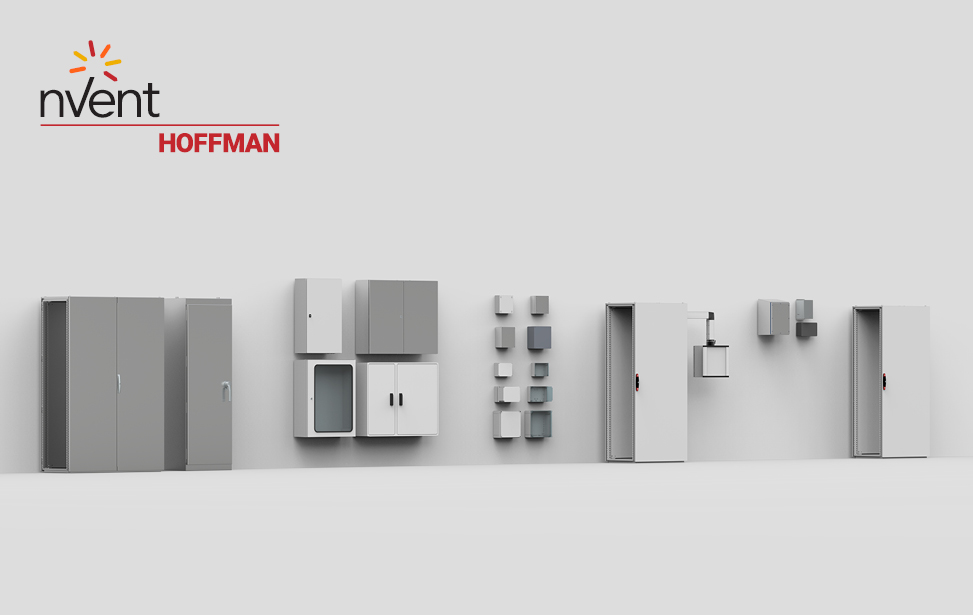
Advanced Anti-Corrosion Coatings
Hoffman applies a multi-layer surface treatment process that meets military and heavy industrial standards:
- Multi-layer Powder Coating: Utilizes advanced electrostatic powder coating technology to guarantee uniform coverage, even in blind corners and sharp metal edges.
- Polyester Coating for Outdoor Enclosures: A specialized coating with extremely high ultraviolet (UV) resistance, preventing the paint from becoming brittle or fading under intense sunlight.
- Primer Coating (Zinc-Rich Primer): Designed for highly corrosive environments (such as fertilizer plants or coastal areas), providing electrochemical protection to prevent rust from spreading even if the enclosure body suffers severe scratches.
- Furthermore, to ensure compliance with NEMA standards, all Hoffman enclosure products must pass the following tests:
- Salt spray testing to measure chemical durability.
- Colorfastness testing under high-intensity radiation.
- Adhesion and mechanical impact resistance testing.
Advanced Enclosure Materials
- Polycarbonate (QLINE Series): A highly durable engineering plastic that is lightweight yet highly impact-resistant, providing absolute electrical insulation. It is ideal for small, handheld control devices or installations in damp areas.
- Fiberglass / Composite (ULTRX Series): The ultimate alternative to steel. The ULTRX series resists most acids and alkalis and is entirely non-corrosive, making it perfectly suited for wastewater treatment or chemical plants.
- Aluminum (Wall-mounted Aluminum Series): The wall-mounted aluminum enclosure series offers superior natural heat dissipation and a lightweight design, making it the top choice for telecommunications and renewable energy stations.
Accessories Supporting “Smart Monitoring”
Hoffman upgrades the electrical enclosure from a passive object into an intelligent system thanks to real-time monitoring accessories:
- Thermostat (Thermostat ATEMNOF): Automatically controls fans or enclosure air conditioners, ensuring the internal temperature always remains within a safe threshold for semiconductor components.
- Temperature-Humidity Sensor (Hygrotherm ATEMHUM): Simultaneously monitors both temperature and relative humidity to activate the heater, preventing water condensation—a silent cause of short circuits.
- Remote Monitoring via SpectraCool RAC: A remote monitoring solution for the SpectraCool cooling system. Operators can check the enclosure status over the network and receive instant fault alerts before a failure occurs, optimizing predictive maintenance planning.
SERVO DYNAMICS – THE OFFICIAL DISTRIBUTOR OF nVent HOFFMAN IN VIETNAM
In every industrial system, protecting expensive control equipment from harsh environmental impacts is vital to maintaining continuous operations. As the Official Distributor of nVent HOFFMAN, Servo Dynamics proudly delivers world-class electrical enclosure and thermal management solutions, ensuring absolute safety for your business’s electrical and automation infrastructure.
Why Servo Dynamics is Your Trusted Choice for nVent HOFFMAN Solutions:
-
Comprehensive Protection Ecosystem: We offer a diverse product portfolio from nVent HOFFMAN, including mild steel powder-coated enclosures, stainless steel (304, 316L) enclosures, fiberglass enclosures, and specialized cooling solutions (Enclosure Air Conditioners, Heat Exchangers). Every product meets stringent international standards such as UL, NEMA, and IP ratings.
-
Tailored Solutions for Any Operating Environment: From food processing plants requiring high hygiene standards to oil and gas rigs exposed to severe marine salt-spray corrosion, Servo Dynamics consults and provides specialized enclosure lines to guarantee that your internal components always operate under optimal conditions.
-
In-Depth Technical Consulting Capabilities: Servo Dynamics’ engineering team goes beyond simply supplying hardware. We support customers with heat load calculations, material selection, and designing the most appropriate protective systems tailored to specific project requirements—helping extend equipment lifespan and minimize replacement costs.
-
Commitment to Genuine Products & Reliable Support: As a strategic partner, we guarantee 100% genuine products, complete technical certifications, and full compliance with nVent HOFFMAN’s global warranty policies.