Tiếng Việt
Consulting
What are Fire Alarm Sensors? Definition, Structure, and Functions of Fire Alarm Sensors.
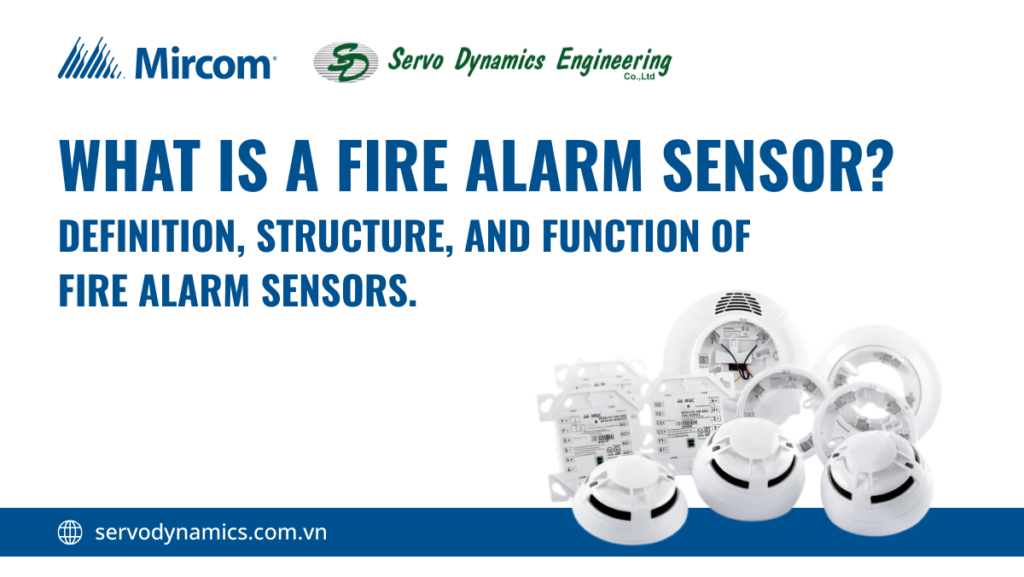
Overview of Fire Alarm Sensors
What are fire alarm sensors?
Fire alarm sensors are input devices in automatic fire alarm systems that detect physical signs of fire, including smoke, temperature increase, flame radiation, and concentration of toxic gases.
The basic operation of a fire detector includes three steps:
- Receiving signals from the environment
- Analysis via a processing board
- Transmitting digital or analog signals to the fire alarm control panel
The role of sensors in automatic fire alarm systems
- Detecting the source of fire at the initial stage, increasing accuracy and timeliness in the fire prevention and firefighting process.
- Reducing damage to people and property: speeding up the evacuation process when a fire occurs.
- Activating fire alarm bells, indicator lights, and fire extinguishing systems.
Classification of Fire Alarm Sensors
There are four main types of fire alarm sensors, based on the input signal:
- Smoke Detector: reacts to suspended particulate matter in fire smoke.
- Heat Detector: reacts to temperature variations.
- Flame Detector: reacts to the optical radiation spectrum.
- Multi-sensor Detector: combines multiple types of sensors into a single product. The most common type today is the optical smoke detector, which also monitors temperature rise to confirm fire conditions.
Standard Technical Structure of a Fire Alarm Sensor Head:
The standard technical structure of a fire alarm sensor head includes:
- Protective housing:
- Material: uses heat-resistant ABS or polycarbonate plastic, with a wide operating temperature range to increase fire resistance, mechanical impact resistance, and maintain operation at high temperatures.
- Includes smoke intake/ventilation vents that optimize airflow, allowing smoke particles or heat energy to reach the sensor as quickly as possible.
- Printed Circuit Board (PCB): the central control unit of the sensor.
- Microprocessor (microcontroller): performs algorithms to compare the input signal with a pre-programmed alarm threshold.
- Signal analysis circuit: converts analog data from the sensor module to digital signals, minimizing errors during transmission to the fire alarm control panel.
- Noise filter circuit: eliminates electromagnetic interference (EMI) and radio frequency interference (RFI), ensuring the device is not falsely triggered by surrounding electronic devices.
- Sensor module: the key component that performs the function of identifying and converting physical information and parameters into electrical signals. Although each type of detector uses a different detection principle, all sensor modules adhere to the following common operating characteristics:
- Switching function: The detector of the sensor module is in direct contact with the environment, measuring variations in relevant factors and digitizing the data for microprocessor analysis.
- Activation threshold setting: A signal is only sent to the control panel when the measured quantity exceeds a pre-set boundary value.
- Signal selection: Modern sensor modules are designed to prioritize the detection of a specific stimulus, in order to distinguish between actual fire phenomena and interference from the operating environment.
- Status LEDs: Provide visual information about the operating status of the device in the field, including modes for signaling:
- Operation LED: The LED flashes periodically, confirming that the device is powered and communicating normally with the control panel.
- Fire alarm LED: The LED lights up steadily (or flashes rapidly red) when the measured value exceeds the alarm threshold.
- Fault indicator LED: Usually displays yellow or flashes in a distinct rhythm to indicate a dirty measurement chamber or connection error.
- Detector Base/Connection Pins
- Physical Communication Module: Twist-lock design allows for quick installation and removal of the detector for maintenance without affecting the wiring system.
- Transmission Mechanism: Contains nickel-plated or anti-oxidation terminals (L+, L-) ensuring the continuity of the signal circuit over a long period.
- Fire alarm system communication module: This component is responsible for establishing a data link between the sensor and the central control panel. Communication modules have two types of signal transmission:
- Conventional system: The module operates based on changes in current on the line. When an alarm occurs, the module activates a current surge state for the central control panel to detect.
- Addressable System: This module uses a digital communication protocol to send a unique device identifier data code, allowing the control panel to accurately determine the location of the activated detector.
Distinguishing Types of Fire Alarm Sensors
Smoke Detectors
Definition of Smoke Detectors
These are sensors that detect the presence of airborne particulate matter created by smoke from a fire. Smoke detector products are classified into two product lines, based on their operating mechanism:
- Photoelectric/Optical: Uses the principle of light scattering. In a dark chamber, the receiving diode is placed at an angle to the LED light source. When smoke particles enter the optical chamber, the light is scattered onto the receiving diode, activating it..
- Ionization: Uses a small amount of discharge material to ionize the air between two electrodes. When smoke enters, the current between the two electrodes decreases and triggers the alarm. Currently, this type of detector is gradually being replaced by optical smoke detectors due to requirements for managing radioactive materials.
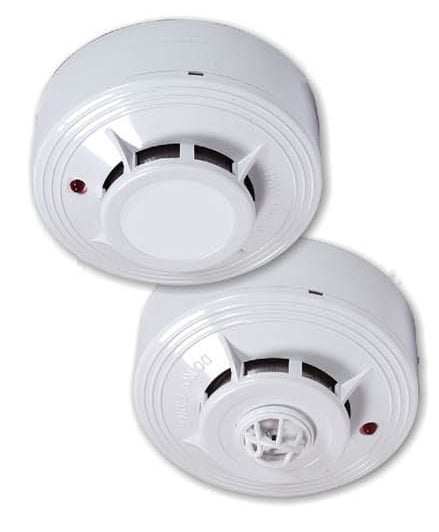
Conventional Photoelectric Smoke Detector Mircom SD-2WP-LED |
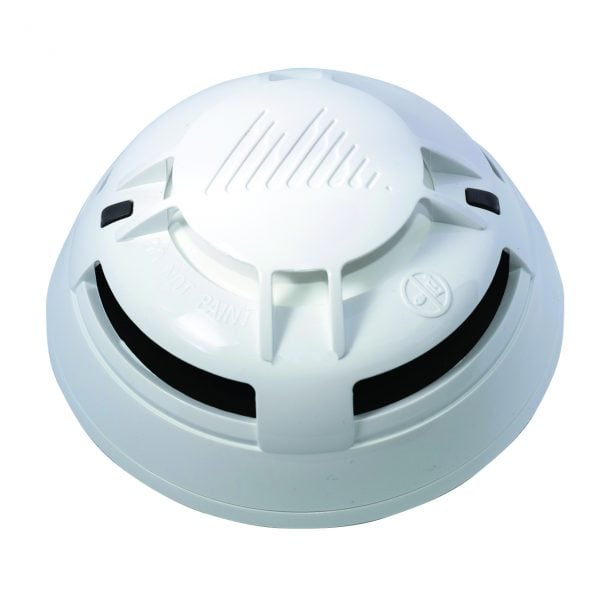
Addressable Photoelectric Smoke Detector Mircom MIX-4010 |
Advantages – Limitations – Suitable Environment
- Advantages:
- Extremely fast response to smoldering fires, generating smoke before igniting into flames.
- High sensitivity to fires originating from organic materials (fabric, wood, plastic).
- Compact size, easy to install.
- Limitations:
- High false alarm rate in environments with moisture, fine dust, or kitchen smoke.
- Performance depends on the wind direction guiding smoke into the sensor chamber.
- Regular maintenance and cleaning of the darkroom are necessary to ensure performance.
- Suitable environment: indoor environments, work offices, etc.
Heat Detectors
Definition and operating mechanism of heat detectors
These are sensors that detect changes in ambient temperature. There are two fire alarm mechanisms:
- Rate-of-Rise: triggers the fire alarm when the temperature suddenly increases rapidly in a short period of time, regardless of the starting temperature.
- Fixed Temperature: triggers the fire alarm when the ambient temperature reaches a certain threshold.
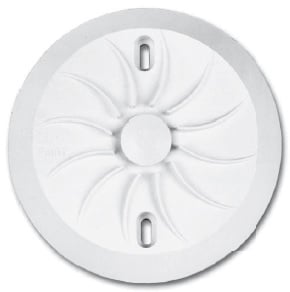
Conventional Heat Detector Mircom TD Series |
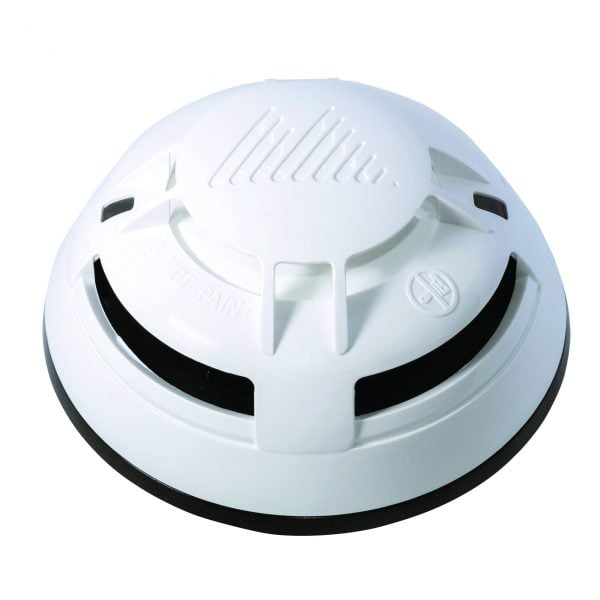
Addressable Heat Detector Mircom MIX-4030 |
Advantages – Limitations – Suitable environments
- Advantages:
- High stability and reliability.
- Completely unaffected by dust, smoke, or water vapor.
- Low operating costs and long component lifespan.
- Limitations:
- Slow fire alarm speed: The housing and sensor head receive heat slowly due to material or environmental factors.
- Ineffective in large spaces, or when ceilings are too high, resulting in a large distance between the fire and the sensor.
- Suitable environments: Kitchens, garages, woodworking shops, paper warehouses, production areas generating a lot of dust and localized heat.
Flame Detectors
Definition and operating mechanism of heat detectors
These are optical fire detectors that detect fires through the radiation of a flame. There are three ways to measure radiation and determine if a fire is present:
- Ultraviolet (UV) threshold measurement: detects the UV radiation of the flame.
- Infrared (IR) threshold measurement: detects the infrared spectrum of the flame.
- Combined UV/IR: combines both measurement mechanisms, matching both radiation thresholds to eliminate interference sources such as sunlight or arc welding sparks.
Advantages – Limitations – Suitable Environments
- Advantages:
- Fastest fire detection speed, detecting fires as soon as they break out
- Quick and accurate detection of fire location
- Wide scanning angle and large protection distance.
- Limitations:
- Does not work well if there are obstructions blocking the flame
- May cause false alarms due to arc welding sparks
- Higher equipment cost than other types of fire alarm sensors
- Suitable environments: Chemical storage warehouses, gas stations, high-ceiling workshops, areas containing highly flammable and explosive materials.
Multi-sensor Detectors
These are int
Definition and operating mechanism of multi-sensor smoke detectors
Sensors that integrate two or more sensing technologies (most commonly photoelectric and thermal) in a single device. The goal of this combination is to simultaneously analyze multiple signs of a fire to make a more accurate alarm decision compared to a single sensor.
- Optical-Thermal Combination: The device uses an optical dark chamber to detect suspended smoke particles, while simultaneously using a thermistor to monitor the increase in ambient temperature.
- Analysis Algorithm: Signals from both sensors are processed by a microcontroller. Alarms are only triggered when both factors reach dangerous thresholds, or when one factor experiences a sudden increase accompanied by fluctuations in the other.
Advantages – Limitations – Suitable Environment
- Advantages:
- Minimizes false alarms: Excellent ability to distinguish between actual smoke from a fire and interference.
- Detects various types of fires: Sensitive response to both smoldering fires (thanks to optical sensors) and rapidly spreading, high-heat fires (thanks to thermal sensors).
- High Reliability: Intelligent algorithms allow the device to automatically adjust its sensitivity threshold according to environmental conditions.
- Limitations:
- High cost: Higher initial investment cost compared to single-sensor systems due to the integration of multiple components and microprocessors.
- Technical requirements: Requires a compatible control system (central control panel) to fully utilize the complex data reporting features
- Suitable environment: Areas sensitive to false alarms such as industrial kitchens, hallways near bathrooms, or areas with fluctuating humidity.
Technical characteristics to consider when choosing fire alarm sensors
When selecting fire alarm equipment, it is necessary to carefully analyze information about the actual environment and the technical specifications of the device to ensure compatibility and operational capability.
Response speed
- Detection phase: It is necessary to determine the type of fire risk at the location, whether it is a smoldering fire (producing smoke) or a flaming fire (producing heat/flame), in order to select a sensor with a corresponding sensitivity spectrum.
- For example: In a document storage facility, optical smoke detectors should be used because they can detect incidents within 2-3 minutes of smoke emission, while heat detectors may take up to 10-15 minutes to activate because the temperature is not yet high enough.
- Activation delay: The time interval from when the detector detects combustion elements (smoke/heat/flame) until a signal is received by the control panel.
- Gas flow characteristics: The penetration ability of smoke into the sensor chamber or the rate of heat absorption by the device casing.
- Compatibility with combustible materials: The response speed must correspond to the type of fuel burning at the site.
Resistance to harsh environments (dust, moisture, vibration, chemicals).
- IP (Ingress Protection) rating: Evaluates environmental factors to select a product with the ability to prevent fine dust and water from entering the circuit board.
- Example: In manufacturing plants with extremely high dust concentrations, using an IP54 rated detector will prevent dust from adhering to electronic components, causing short circuits and false alarms.
- Corrosion resistance: Uses specialized plastic housing materials and a protective coating on the circuit board to resist moisture and corrosive chemicals.
- Mechanical durability and vibration resistance: ability to withstand vibrations from surrounding machinery and minor physical impacts.
- Operating temperature range: Ensures stable operation of the equipment within the temperature range of the area.
False alarm rate
- Noise filtering technology: uses dual-sensor or multi-spectrum technology to distinguish between real flames and interference sources such as sunlight, arc welding sparks, or steam.
- Alarm threshold stability: ability to automatically adjust the threshold according to the environment (Drift Compensation) to avoid false alarms when the equipment becomes dirty over time.
Installation and maintenance costs
- Initial investment cost: Includes the cost of the equipment, wiring costs, and the complexity of the accompanying control system.
- Compatibility with existing infrastructure and supporting equipment requirements.
- Maintenance frequency: Costs for periodic cleaning, functional checks, and component replacement (such as batteries or LED light sources).
- Equipment lifespan: Total cost of ownership (TCO) calculated over the product’s lifecycle.
Proper installation and maintenance of fire alarm sensors according to Vietnamese Standards
Installation location and height
The installation of fire alarm systems in Vietnam must strictly comply with the regulations in TCVN 7568-14:2025 and related standards to ensure legal compliance during fire safety approval. According to TCVN 7568-14:2025, the fire alarm sensor head must be installed at an appropriate height:
- For smoke sensors: the maximum installation height is 15m. The installation location must be at least 1m away from air conditioners or ventilation systems to avoid diluting the smoke concentration in case of an incident.
- For heat sensors: TCVN (Vietnamese National Standards) does not specify a maximum installation height (depending on the manufacturer’s technical design), however, they should be installed near points with a high risk of heat generation but not exceeding the device’s operating temperature range.
- For fire sensors, TCVN 5738:2021 requires the installation height to be appropriate to the sensitivity level of the fire detector, with a maximum distance from the fire detector to the flame meeting the standard:
- Sensitivity level 1: 25m
- Sensitivity level 2: 17m
- Sensitivity level 3: 12m
Basic installation steps:
- Step 1: Wiring: Deploy the signal wiring system from the control panel to the detector locations. Requirement: Use fire-resistant cable and route it in EMT steel conduit or fire-resistant plastic conduit to protect the integrity of the signal circuit in case of fire.
- Step 2: Base Installation: Secure the detector base to the ceiling or technical box. Connect the wires to the terminals (L+, L-) according to the manufacturer’s schematic diagram, ensuring tight connections to prevent electrical leakage.
- Step 3: Head Installation: Attach the detector body to the base using the specialized swivel joint. Only perform this step after the construction area has been thoroughly cleaned of industrial dust to avoid contaminating the optical chamber from the outset.
- Step 4: Configuration/Addressing: For addressable fire alarm systems, use a specialized handheld device to load the address code for each detector, allowing the control panel to accurately identify the installation location.
- Step 5: Testing: Use a specialized smoke/heat generator for practical testing. Confirm that the signal transmitted to the control panel is accurate in both time and address display.
Standards and Scheduled Maintenance
Inspection and Maintenance Cycle according to TCVN
According to TCVN 3890:2023, automatic fire alarm systems must be inspected and maintained periodically with a specific schedule:
- Functional inspection (at least every 6 months): The entire system must be tested for activation and signal transmission capabilities. The interval between two inspections should not exceed 6 months.
- Overall maintenance (every 2 years): Perform a detailed inspection of all equipment, clean the sensor chamber, and measure the technical parameters of each detector.
In-depth technical maintenance content
On-site maintenance procedures should focus on the core components of the detector:
- Cleaning the Sensing Chamber: For smoke detectors, use a specialized vacuum cleaner or clean compressed air to remove accumulated dust in the optical chamber. Resistance measurement: For heat detectors, use specialized measuring equipment to check the resistance value in a static state, ensuring that the NTC component is not aging or broken.
- Current consumption check: Measure the current at the detector’s communication module in both standby and alarm states. An abnormal increase in current is a sign of a short circuit or degraded electronic components.
Signs and Timing of Equipment Replacement
Maintaining equipment that is past its lifespan or physically damaged will increase the system failure rate
- “Dust Contamination” Warning: On addressable fire alarm systems, the control panel will display the contamination level of each detector. When the contamination level exceeds the drift compensation threshold, the device must be cleaned immediately or replaced if it cannot be repaired.
- LED Light Source Aging: Infrared light sources in the optical chamber have an average lifespan of about 10 years. After this time, the light intensity decreases, causing the sensor’s sensitivity to no longer meet UL/TCVN standards.
- Communication Module Error: If the control panel frequently displays “No Reply” or “Invalid Reply” at a specific address, the detector’s communication module is faulty and needs to be replaced.
Introducing Mircom Fire Alarm Sensors
Advantages of Mircom Fire Alarm Sensors
- Minimizing False Alarms: Mircom sensors integrate a microprocessor capable of distinguishing between smoke generated by fire and similar agents such as steam and fine dust from production activities, minimizing false alarms.
- Compliant with International Safety Standards: ISO 9001:2015 (2024-2027) certified and compliant with other international standards such as UL/ULC, FM, and CSFM.
- Diverse Product Ecosystem: Offers a full range of detectors from general-purpose to specialized, meeting the needs of projects of all sizes, from office buildings to heavy industrial zones.
- Easy to replace and maintain: Modular design simplifies replacement and routine cleaning, requiring no complex tools, thus reducing OPEX costs for businesses.
- Diverse accessories: Integrated base system with alarm speaker or local relay enhances local alarm capabilities and assists in fire location identification.
How to choose Mircom fire detectors according to operating environment
SD Series Smoke Detectors for Warehouses, Small and Medium-Sized Production Facilities
- Environmental characteristics: open spaces, with light industrial dust or vibrations from production machinery. For small production facilities, cost optimization is key while ensuring fire safety standards are met.
- Optimal product: Traditional SD Series smoke detectors (SD-2WP / SD-4WP).
- Product Advantages
- Cost-effectiveness: Mircom’s lowest-cost product line, suitable for installing a large number of detectors over a wide area without requiring detailed address management for each point.
- Simple Operation: “Plug and Play” operation allows internal personnel without high-level fire safety expertise to install, test, and replace without complex programming software.
MIX-4010 Smoke Detector for High-Rise Buildings and Complexes
- Environmental Characteristics: Large number of fire alarm points and complex spatial structures require centralized management and precise location identification.
- Optimal Product: MIX-4010 Addressable Smoke Detector
- Product Advantages:
- Precisely identifies the location of the apartment/office experiencing the incident via a unique address code.
- Integrated sounder base for localized room alerts, preventing panic throughout the building in case of minor incidents.
- Computer graphics system supports intuitive floor plan management.
MIX-4020 Combined Sensor Product Line for Kitchens, Service Areas, and Laundry Rooms
- Environmental characteristics: frequently cleaned, low dust levels, but prone to steam, cooking smoke, and sudden temperature changes, which can cause false alarms with conventional smoke detectors.
- Optimal product: MIX-4020 multi-functional sensor.
- Product advantages:
- Cross-checking algorithm: MIX-4020 simultaneously analyzes variations in smoke and heat. The device only triggers an alarm when both parameters reach dangerous thresholds according to the logic of a real fire.
- Automatic error compensation: Automatically adjusts the sensitivity threshold when the photocell is soiled or humidity changes, helping to maintain long-term stability in complex environments.
TD Series Thermal Sensors for Garages, Parking Lots, and Technical Areas
- Environmental Characteristics: Open spaces with high concentrations of carbon emissions, fine dust, and grease. If using smoke detectors or multi-vibration detectors, the photoelectric chamber is easily contaminated, causing logic conflicts and continuous error reporting.
- Optimal Product: Traditional TD Series thermal detectors.
- Product Advantages:
- Immunity to Gaseous Agents: Due to the absence of a dark chamber, the TD series is completely unaffected by vehicle exhaust fumes or dust.
- High Mechanical Durability: Thermistor temperature sensor components have a long lifespan and are less prone to physical damage when installed in semi-open areas or areas with fluctuating humidity.
MIX-4030 Thermal Sensors for Technical Areas and Special Environments
- Environmental Characteristics: Complex environments with many small technical rooms, frequently containing fine dust, moisture, chemical vapors, or smoke.
- Optimal Product: MIX-4030 Addressable Thermal Sensor.
- Advantages of the product
- Intelligent address management: allows the FX-4000 control panel to know exactly which technical room is overheating, enabling immediate troubleshooting before a fire breaks out.
- Real-time status monitoring: The device continuously sends current temperature data to the control panel, allowing operators to monitor abnormal changes in equipment and machinery within the monitored area.
Servo Dynamics Engineering: Authorized Distributor of Mircom in Viet Nam

- International standard products: 100% imported from Canada, with full CO and CQ certificates.
- In-depth technical consultation: Our team of engineers will assist in calculating voltage drop and installation distances to ensure perfect system operation.
- Competitive pricing: As a direct distributor, SDE offers the best prices for dealers and subcontractors.
- Fast warranty service: We have readily available replacement parts, ensuring uninterrupted safety for your project.
Explore more products from Mircom


Read more

Securing Central Park Tower: Mircom’s Smart Fire Alarm Solution for Building Safety
Central Park Tower, a symbol of luxury and the world’s tallest residential building in the [...]
Jul

Types of Mircom Smoke Detectors
Did you know that fires can occur at any time, causing serious damage to people [...]
Mar

A Mircom Success Story: Umm Shaharain Warehousing Complex
PROJECT BACKGROUND & SCOPE With Qatar’s stated National Vision of creating a vibrant and prosperous [...]
Dec