Tiếng Việt
Consulting
What are Digital Twins: Structure, Operation Principles, and Industrial Applications of HPC-Accellerated Digital Twin on Edge
Digital Twin technology is reshaping modern factories by pairing real‑time data with fast, HPC‑powered simulation right at the industrial edge. This article breaks down the concept in simple terms, explains how it actually works on the shop floor, and how manufacturers can implement the technology at different scales.
What are Digital Twins: Structure, Operation Principles, and Industrial Applications of HPC-Accellerated Digital Twin on Edge
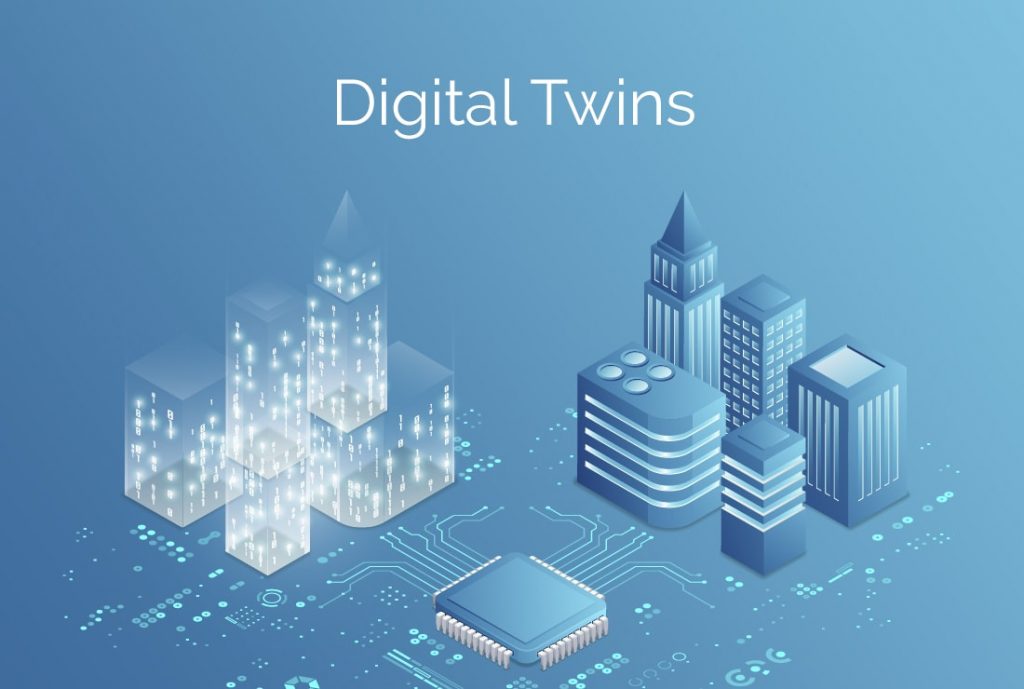
What is a Digital Twin?
A Digital Twin is a real‑time, dynamic virtual replica of a physical product, machine, production line, or an entire factory, continuously updated by live operational data. A digital twin can simulate the current state and behavior of the real system, so engineers can monitor, replicate scenarios based on real data, such as sensor readings, PLC signals, and camera inputs.
This constant synchronization allows engineers to simulate and analyse physical behavior without interrupting actual production, allowing teams to anticipate issues, improve service quality, and guide smarter decision‑making throughout the system’s entire lifecycle.
How does a Digital Twin function?
A Digital Twin works through a continuous, closed‑loop data cycle that synchronizes the physical world with its virtual counterpart. In essence, a Digital Twin system operates in four major steps:
- Sense: The digital twin collects real-life data from sensors/PLCs/SCADA/cameras.
- Synchronize – The raw sensor data stream through the twin’s data pipeline to be processed by edge computing and industrial networks.
- Simulate – The digital twin combines both physics simulation and AI surrogate to enable rapid scenario testing, predictive behavior, and accurate forecasting under multiple scenarios.
- Act – The digital twin provides recommendations or sends automated control adjustments.
Essential Components of a Digital Twin
A production‑grade Digital Twin is realized through a layered architecture that couples low‑latency computing at the edge with high‑fidelity modeling and governed data flows from OT and IT systems. The following components provide the functional backbone required to synchronize the virtual model with its physical counterpart and to support real‑time analytics, simulation, and decision support in industrial environments.
Edge/HPC Infrastructure
Edge computing nodes placed proximal to machines execute time‑critical ingestion, filtering, feature extraction, and AI inference with millisecond‑level response, thereby minimizing network latency and reducing dependence on wide‑area backhaul.
This locality is crucial when safety interlocks, vision inspection, or closed‑loop control must react within a single cycle time. HPC/GPU acceleration supplies the parallel throughput needed for physics‑based simulation and high‑rate inferencing that exceed the capabilities of CPU‑only systems.
Simulation Models and AI Algorithms
The core of the twin is a virtual model that fuses multi‑physics simulation (e.g., thermo‑mechanical behavior, kinematics, line/discrete‑event flow) with machine learning for prediction, anomaly detection, and optimization.
- AI surrogate models can partially replace or augment first‑principles solvers to achieve near‑real‑time performance while preserving fidelity in the operating regime of interest.
- Modern HPC‑AI workflows routinely interleave training, inference, and simulation, enabling rapid “what‑if” exploration and active‑learning loops that refine the twin as new production data arrives.
Real‑Time Data Sources (Sensors, PLCs, Cameras)
A digital twin requires high‑frequency signals from IoT sensors, PLCs/SCADA, and industrial vision systems. These allow the digital twin to capture process states (e.g., vibration, temperature, electrical load), machine logic, and product quality context.
Industrial connectivity—typically via OPC UA, MQTT, and edge gateways—normalizes heterogeneous protocols and assures low‑latency, reliable data delivery to the twin’s data pipeline, which is the defining distinction from static models or offline studies.
Data‑Management Platforms (MES/SCADA/Historian)
A Manufacturing Execution System (MES), SCADA, and time‑series historians are integrated with the twin to achieve operational coherence.
- MES contributes order, routing, genealogy, and schedule context;
- SCADA provides supervisory control, alarms, and operator interventions;
- Historians persist in granular telemetry for backtesting, model training, and audit.
Together these systems supply the business and process semantics that allow the twin to reason not only about equipment conditions but also about production intent and execution state, enabling credible simulations and actionable recommendations.
Visualization and Operational Dashboards
Twin data is displayed through dashboards, industrial HMIs, or increasingly through immersive 3D digital environments. Modern industrial dashboards are built on platforms such as SCADA/HMI suites, MES visualization modules, and OT‑focused digital‑twin engines. These systems offer real‑time 3D views of machines, production cells, and process lines from live telemetry.
By using scene‑graph visualization tied to real operating data, maintenance teams can verify root causes visually, process engineers can simulate production scenarios, and supervisors can collaborate remotely through shared digital views. This results in quicker troubleshooting, fewer on‑floor interventions, and higher confidence before applying any changes to live equipment.
High‑Availability/Fault‑Tolerant Compute Platforms
Fault‑tolerant edge platforms provide automated protection, self‑monitoring, live patching, and integrated virtualization so that SCADA gateways, historians, AI inference services, and simulation runtimes continue operating during component failures or maintenance events.
This prevents data gaps that would desynchronize the model from reality and allows multiple OT/IT workloads to co‑reside securely and predictably on a ruggedized node in harsh industrial environments.
Applications of Digital Twins in Industrial Operations
Predictive Maintenance for Heavy Manufacturing Production Lines
In heavy, continuous‑process environments such as steel mills, cement plants, and oil & gas upstream facilities, Digital Twins running on edge‑accelerated infrastructure flags early degradation (bearing wear, misalignment, lubrication issues) and recommends maintenance windows before a line‑stopping failure occurs.
Running inference at the edge keeps latency to milliseconds and preserves data sovereignty, which is crucial when machines are remote or bandwidth‑constrained.
Quality Optimization and Defect Prevention in Automotive, Electronics, FMCG Assembly Line
In high‑speed automotive assembly, electronics lines, and fast‑moving consumer goods packaging, GPU‑accelerated vision models embedded in the twin detect micro‑defects by fusing camera frames with contextual data from PLCs/MES (speed, temperature, torque, recipe). The system can stop or correct the process to prevent defective work‑in‑process from propagating downstream.
Platforms that connect real‑time IoT data to 3D digital twins further shorten diagnosis and collaboration cycles for quality teams, sustaining millisecond decisions on busy lines.
Ensuring Output Flow for High‑Mix Low‑Volume Production Lines
Digital Twin technology is particularly well‑suited for High‑Mix Low‑Volume (HMLV) manufacturing, where businesses must handle many product variants, small batch sizes, and constantly changing requirements.
HPC enables rapid execution of simulation scenarios, allowing engineers to validate operating sequences in a virtual environment before running them on the physical line. At the same time, Digital Twin models allow the entire changeover process to be tested through simulation, ensuring that setup steps follow the correct sequence and that no logic conflicts occur.
This significantly shortens the time required to introduce new products onto the line, subsequently reducing production costs.
Energy Optimization and Sustainable Operations in Chemical Production
Energy‑intensive sectors benefit from a plant‑level twin that consolidates utility consumption (steam, electricity, compressed air) to compute live energy intensity. AI‑assisted simulation at the edge and in centralized HPC environments then proposes set‑point adjustments, load shifting, or equipment sequencing that reduce energy cost and emissions.
Why Digital Twins Require HPC‑Accelerated Simulation at the Edge
Modern Digital Twins demand high‑performance, low‑latency computation to accurately simulate physical processes, run real‑time AI inference, and synchronize with operational data, all of which exceed the capacity of traditional CPU‑based architectures. HPC‑accelerated simulation, particularly GPU‑driven parallel computation, allows digital twins to perform quickly enough to influence real‑time operational decisions.
In HPC‑enabled digital twin architectures, advanced workloads often require distributing tasks across edge, cloud, and HPC resources, with the edge handling urgent, latency‑sensitive operations while centralized HPC manages large‑scale or computationally heavy simulations.
Edge‑level acceleration ensures that the Digital Twin maintains millisecond response times. Without HPC‑grade performance at the edge, a digital twin would not be able to keep pace with production speeds or maintain alignment with high‑frequency data streams.
The Role of a Fault‑Tolerant Edge Platform in Digital Twin Systems
Ensuring 24/7 Continuity of the Digital Twin
Fault‑tolerant edge platforms such as Stratus ztC Edge provide built‑in redundancy, self‑monitoring, and automated protection mechanisms that keep digital‑twin workloads online 24/7.
Protecting Real‑Time Operational Data
Fault‑tolerant edge platforms safeguard the integrity of real‑time data as it flows from sensors, PLCs, and SCADA systems into the Digital Twin. By protecting data at the computational edge, these platforms minimize security exposure and prevent data loss that might compromise the twin’s accuracy.
Eliminating Downtime During Failover Events
Fault‑tolerant edge platforms perform automated failover with no interruption to running workloads. This seamless transfer between redundant compute modules prevents service disruptions and ensures uninterrupted telemetry, enabling stable real‑time analytics and control decisions even during hardware faults.
Maintaining High‑Speed Simulation and AI Inference
Fault‑tolerant edge systems ensure performance‑sensitive workloads continue operating without degradation during component failures. When combined with GPU or HPC acceleration, they support millisecond‑level inference and deterministic simulation cycles essential for industrial automation.
Preserving Synchronization Between the Model and Physical Asset
Continuous availability features—such as self‑healing, data mirroring, and live patching—ensure the virtual model remains fully synchronized with the physical equipment.
Supporting Multiple Concurrent Workloads on a Single Node
Fault‑tolerant platforms with integrated virtualization are purpose‑built to host multiple workloads in parallel while maintaining high availability and predictable performance. This consolidation simplifies deployment and reduces the need for separate hardware assets.
Reducing Cloud Dependence and Minimizing Latency
By processing data and running simulation/AI workloads locally, fault‑tolerant edge systems significantly reduce reliance on cloud computing, which strengthens data‑sovereignty and reduces cloud-latency.
Increasing the Reliability of Simulations in Mission‑Critical Production Lines
In industries such as pharmaceuticals, food & beverage, oil & gas, and discrete manufacturing, simulation results must be consistent and available at all times. Fault‑tolerant infrastructure ensures that Digital Twin simulations retain their reliability even when hardware disturbances occur.
Enabling the Foundation for Autonomous Operations
Autonomous or semi‑autonomous factory operations rely on Digital Twins running AI‑driven monitoring, optimization, and decision‑making loops at the edge. Fault‑tolerant platforms provide the stability required for such closed‑loop systems, ensuring that automated actions are always based on up‑to‑date, high‑integrity data.
Ensuring Stability Across the Entire OT/IT Stack
A Digital Twin depends on the seamless interaction of OT systems (PLCs, SCADA, sensors) and IT systems (MES, analytics, AI engines). Fault‑tolerant edge computer acts as a stabilizing anchor, hosting critical middleware layers and maintaining continuous communication between all levels.
Architecture of Deploying Digital Twin + HPC for Manufacturing
Cell Level (Machine / Workcell)
At the Cell level, the Digital Twin represents individual machines or workcells such as CNC machines, robotic arms, assembly stations, or inspection stations.
- Core elements: detailed 3D machine models, motion simulation, actuator/sensor states, and real‑time PLC data.
- Role of HPC: accelerates physics‑based simulation, robotic path optimization, collision detection, and rapid multi‑scenario testing.
- Value of Digital Twin: enables offline programming, cycle‑time optimization, predictive maintenance, and reduces machine downtime during configuration changes.
Line Level (Production Line)
At the Line level, the Digital Twin focuses on the flow and interactions between multiple cells along a production line.
- Core elements: logic models of conveyors, buffers, timing, throughput, bottleneck analysis, and sequence planning.
- Role of HPC: runs discrete‑event simulations, explores hundreds of layout or scheduling variations in parallel, and predicts throughput under different conditions.
- Value of Digital Twin: identifies bottlenecks, improves resource allocation, validates layout changes, and optimizes the entire line without disrupting ongoing production.
Plant Level (Factory / Facility)
At the Plant level, the Digital Twin expands into a comprehensive factory‑wide model, integrating both OT and IT systems.
- Core elements: MES/SCADA data, plant‑wide energy usage, internal logistics, production plans, and utilities such as HVAC, compressed air, and thermal systems.
- Role of HPC: powers large‑scale optimization—multi‑line scheduling, energy optimization, material‑flow simulation, and scenario forecasting.
- Value of Digital Twin: supports real‑time operational decision‑making, reduces plant‑wide costs, improves throughput, and provides a predictive model for enterprise‑level planning.
Penguin Solutions – The High‑Performance Edge Computing Platform of Choice for Digital Twin.
Penguin Solutions offers HPC and edge‑accelerated platforms that provide the compute backbone needed to process high‑volume sensor data, run physics‑plus‑AI simulations in real time, and deliver actionable insights back to the factory floor. In practice, Penguin’s infrastructure enables Digital Twins to operate continuously, at full fidelity, and at the speed modern plants demand.
Servo Dynamics – Master Distributor of Penguin Solutions (Stratus Technologies) in Vietnam
Servo Dynamics, the official Master Distributor of Stratus Technologies in Vietnam, provides advanced fault-tolerant Edge Computing solutions for local enterprises. With a mission to deliver continuous availability, seamless integration, and real-time data processing, Servo Dynamics ensures Vietnamese businesses gain access to cutting-edge technologies such as ztC Edge and ftServer.
Servo Dynamics is committed to supporting local industries through expert consulting, seamless implementation, and ongoing support, helping Vietnamese businesses leverage Stratus technologies to compete and grow in today’s data-driven world.