Tiếng Việt
Consulting, Industrial Automation, News
What is a Vacuum Pump? Structure, Classification, Principle & Applications
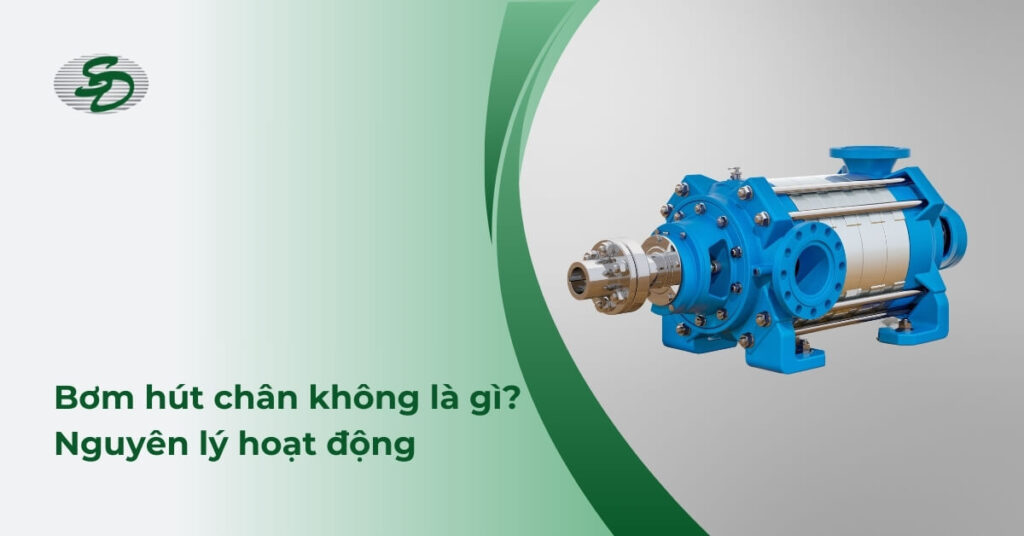
What is a Vacuum Pump?
Vacuum Pump Definition
A Vacuum Pump is a specialized mechanical device that operates on the principle of changing volume, aiming to continuously remove gas molecules, water vapor, and other volatile substances from a confined, sealed space.
The ultimate goal is to create an environment with much lower pressure than atmospheric pressure (101,325 Pa or 760 Torr), known as a vacuum environment.
Common units for measuring vacuum level include:
- Pascal (Pa) / Kilopascal (kPa): The SI unit, commonly used in engineering.
- Millibar (mbar): The most frequently encountered unit in industrial pumps. 1 bar = 1000 mbar.
- Torr: A traditional unit, 1 Torr is approximately 133.32 Pa.
Function & Purpose
The core function of a vacuum pump is to create and maintain a stable vacuum level for manufacturing or research processes. Detailed purposes include:
- Contaminant Removal: Extracting air, inert gases, and moisture from sensitive systems (such as refrigeration systems, semiconductor equipment) to prevent chemical reactions or technical failures.
- Production Support: Generating strong suction force for material holding (CNC clamping), assisting with molding processes, rapid drying (vacuum drying), or low-temperature distillation.
- Preservation and Packaging: Removing oxygen from packaging (vacuum packaging) to slow down oxidation and food decomposition.
- Research & Medical: Providing an ultra-low pressure environment for complex analytical equipment (like electron microscopes) and fluid suction applications in medicine.
Vacuum Pump Structure

The structure of a Vacuum Pump varies widely depending on the technology, but the following basic components always play a crucial role:
Pump Housing
Manufactured from materials with high mechanical strength, such as cast iron or aluminum alloy, the pump housing is not only a protective casing but also the chamber that precisely contains and positions the rotating components (rotor, vanes), ensuring tight sealing and resistance to high compression pressures.
Compression Chamber & Inlet Port
This is the space where the volume is continuously changed. The Inlet Port connects to the system requiring the vacuum. The Compression Chamber is where the gas is squeezed, and the pressure increases enough for the exhaust valve to open, expelling the waste gas.
Drive Motor
Mostly electric motors, they provide the torque to spin the rotor. In large industrial pumps, the motor is often connected to the pump via a flexible coupling to reduce vibration and protect the motor.
Vanes / Impeller / Diaphragm
This is the “heart” of the pump, determining the operating principle:
- Vanes: Often made from high-temperature resistant composite materials (carbon) or metal. They slide centrifugally to maintain contact with the chamber wall, creating sealed chambers with changing volume.
- Impeller/Rotor: In screw or Root pumps, the synchronization and precision of the rotor determine the pump’s efficiency and oil-free operation capability.
- Diaphragm: Made from synthetic rubber or PTFE, the diaphragm separates the drive mechanism from the gas chamber, ensuring the suctioned gas is completely uncontaminated by oil.
Check Valve & Exhaust Valve
- Check Valve: Extremely important, it automatically closes when the pump stops operating, preventing vacuum oil or outside air from back-flowing into the vacuum system.
- Exhaust Valve: It is a pressure valve that only opens when the compressed gas pressure in the chamber slightly exceeds atmospheric pressure (usually greater than 1 bar).
Vacuum Oil (for Oil-Sealed Pumps)
Specialized vacuum oil must have extremely low viscosity and saturated vapor pressure. It performs the following roles:
- Sealing: Completely seals the gap between the vane and the pump body, helping to achieve a deep vacuum level.
- Lubrication: Reduces friction and wear on moving parts.
- Cooling: Dissipates heat generated by friction and gas compression.
Gas Filter – Oil Filter – Oil Mist Separator
These are consumable parts that need periodic replacement:
- Inlet Filter: Prevents dust and large particles from entering, protecting the vanes and pump chamber from damage.
- Oil Filter: Keeps the oil clean, removing metal debris.
- Oil Mist Filter: Located at the exhaust port, it condenses and separates tiny oil particles suspended in the exhaust gas, ensuring cleaner emissions and returning oil to the pump.
Vacuum Pump Operating Principle
General Principle
The general operating principle of a Positive Displacement Vacuum Pump is the periodic volume change of the working chamber to move gas from a low-pressure area (inlet) to a high-pressure area (exhaust).
Suction – Compression – Exhaust Cycle
- Intake: The working chamber expands maximally, creating the largest volume and lowest pressure. Gas from the external system moves in due to the pressure difference.
- Compression: The working chamber is sealed, and the volume begins to decrease (due to the rotation of the rotor or the movement of the piston/diaphragm). The gas inside is compressed, and the pressure gradually increases.
- Exhaust: When the compressed gas pressure slightly exceeds atmospheric pressure (usually greater than 1 bar), the exhaust valve opens, and the gas is expelled.
Operating Principle by Technology
Oil-Sealed Rotary Vane Vacuum Pump
Oil acts as an absolute sealant, allowing the pump to achieve a deep vacuum level. As the rotor turns, centrifugal force pushes the vanes out, pressing them against the chamber wall. The oil fills the microscopic gaps, creating nearly perfect isolation between the inlet and exhaust ports.
Oil-Free Vacuum Pump
These typically use self-lubricating materials (like carbon) for the vanes or non-contact chamber designs (like dry screw pumps). Since there is no oil for sealing, the maximum vacuum level is generally lower than oil-sealed pumps, but the absolute advantage is that they do not produce oil-contaminated exhaust gas.
Water Ring Vacuum Pump
Water is the working fluid. The eccentrically mounted Impeller rotates to create a water ring concentric with the pump body. Chambers with changing volume form between the water ring and the impeller. Because water has excellent cooling capabilities and can dissolve water vapor, this type of pump is ideal for humid, dirty environments.
Diaphragm Vacuum Pump
Uses a flexible membrane that moves back and forth due to a crank mechanism. The diaphragm separates the gas from the drive mechanism, ensuring pure exhaust gas. This type only generates rough or medium vacuum but is very durable and does not require oil maintenance.
Screw Vacuum Pump
Uses two counter-rotating screws with a minimal gap, pushing gas from the inlet to the exhaust. If it is a Dry Screw type, there is no oil or water in the compression chamber, allowing for deep vacuum levels and high pumping speeds with less maintenance.
Vane Vacuum Pump
This category includes both oil-sealed and dry vane pumps. The key mechanism is the vanes sliding inside the eccentric rotor.
Vacuum Pump Classification
Detailed classification helps determine the optimal investment choice.
Classification by Principle
| Technology | Vacuum Level (Max) | Typical Pressure Range | Notable Applications |
|---|---|---|---|
| Oil-Sealed Pump | Deep | 0.001 mbar to 0.01 mbar | Packaging, drying, research. |
| Oil-Free Pump | Medium – Low | 10 mbar to 100 mbar | Medical, CNC, printing, laboratories. |
| Water Ring Pump | Medium | 30 mbar to 100 mbar | Chemical, paper, plastic industries. |
| Screw Vacuum Pump | Very Deep (Dry) | 0.0001 mbar to 0.01 mbar | Semiconductor, heavy industry. |
| Diaphragm Pump | Medium – Rough | 1 mbar to 100 mbar | Chemical filtration, distillation. |
Classification by Stages
Single Stage Pump
The gas compression process occurs only once. Easy to manufacture, low cost, used for applications requiring only rough or medium vacuum (greater than 1 mbar).
Two Stages Pump
The gas is compressed through two consecutive stages. After primary compression, the gas is fed into the secondary chamber for further compression, helping to reduce the ultimate pressure to very deep levels (less than 0.1 mbar), often used for laboratories or refrigeration system repairs requiring high cleanliness.
Classification by Application
Industrial Vacuum Pumps
Includes large capacity pumps (screw, oil-sealed) used for systems requiring high pumping speed and continuous operation (24/7), such as in casting and metallurgy industries.
Laboratory Vacuum Pumps
Requires absolute cleanliness (Oil-free), pressure stability, and corrosion resistance (chemical resistance). Typically diaphragm pumps or dry vane pumps.
HVAC / Refrigeration Vacuum Pumps
These are compact 2-stage oil-sealed pumps, focused on removing moisture to the lowest possible level, preventing acid formation in the refrigeration system.
CNC Vacuum Pumps
Uses dry vane or water ring pumps to create fast and strong clamping force on the machining table.
Classification by Power
| Classification | Typical Power | Applications |
|---|---|---|
| Mini | Under 250W (12V – 24V DC) | Personal medical devices, portable gas sampling machines. |
| Medium | 0.75kW – 2.2kW (1 HP – 3 HP) | Packaging machines, medium-sized laboratories, small enterprises. |
| Large Industrial | 3kW – 11kW and above | Central vacuum systems, large factories. |
Important Technical Specifications to Know
Flow Rate (m³/h, L/min)
Represents the Pumping Speed. This is the maximum volume of gas the pump can extract in a unit of time. This specification determines the time required to achieve the desired vacuum level in the system.
Vacuum Level (bar, Pa, mbar)
More precisely, the Ultimate Absolute Pressure. This is the lowest pressure level the pump can achieve. This specification must be directly compared with the technical requirements of the application (e.g., food packaging requires 1-10 mbar, while vacuum drying may require less than 1 mbar).
Motor Power
Unit is kW or HP. Higher power means faster pumping speed, but also higher electricity consumption and initial investment costs.
Size – Weight
Important for mobile systems or installation in confined spaces.
Compression Pressure
The maximum pressure at which the pump can compress and exhaust gas. For most industrial pumps, the exhaust pressure is atmospheric pressure.
Type of Oil Used
Ensure the correct type of specialized vacuum oil is selected (e.g., synthetic oil, mineral oil) with the appropriate viscosity (ISO VG 46, 68, 100) to optimize sealing performance and pump lifespan.
Applications of Vacuum Pumps
In Industry
CNC Machines – Wood Processing
Dry vacuum pumps (dry vane, water ring) generate a holding force of 1-3 tons/m² to secure the workpiece, ensuring absolute precision during cutting and engraving.
Product Suction – Holding – Clamping
Uses Vacuum Grippers combined with the pump to automate the movement of large material sheets (glass, granite, metal plates) in robotic production lines.
Vacuum Packaging (Food)
Applied in large capacity packaging machines, extending the shelf life of meat, fish, and vegetables by removing spoilage-causing oxygen.
Drying – Firing – Casting
- Vacuum Drying: Reduces the boiling temperature of water, allowing heat-sensitive materials (pharmaceuticals, food, wood) to be dried faster.
- Metal Casting: Vacuum suction is used in casting molds to remove air bubbles, resulting in cast products with high density and purity.
Central Vacuum Systems
Establish a large system, often using screw pumps, providing vacuum to dozens of different usage points within a building or production area.
In HVAC – Refrigeration
Air Conditioner Vacuuming
This is a mandatory step before charging new refrigerant gas. The vacuum process must achieve a deep vacuum level (usually less than 1 Torr) to ensure 100% removal of moisture, preventing blockage or corrosion of the refrigeration system.
Industrial Refrigeration Systems
Uses large capacity pumps to vacuum large-scale cold storages and long refrigerant lines, ensuring reliable system operation.
In Laboratories
Vacuum Filtration
Accelerates the filtration and phase separation rate in chemistry and biology.
Analytical Instruments – Medical Devices
Ultra-clean vacuum pumps are used in sensitive equipment such as GC-MS (Gas Chromatography – Mass Spectrometry), centrifuges, and vacuum generating systems in cleanrooms.
In Medicine
Fluid Suction – Gas Suction Systems
Establish central vacuum systems in hospitals to provide continuous suction for operating rooms and emergency rooms to remove body fluids, or for use with respiratory support equipment.
Advantages & Disadvantages of Each Pump Type
| Pump Type | Detailed Advantages | Detailed Disadvantages |
|---|---|---|
| Oil-Sealed Pump | – Deepest vacuum level (up to 0.001 mbar). – Low initial investment cost. – Quiet operation, low vibration. | – Requires regular oil/filter maintenance. – Risk of oil contamination if exhaust gas treatment is poor. |
| Oil-Free Pump | – Lower maintenance costs (no oil change needed). – Clean exhaust gas, ideal for clean environments. | – Vacuum level not as deep as oil-sealed pumps. – Carbon vanes wear out faster than metal vanes (creating carbon dust). |
| Water Ring Pump | – Superior tolerance for water vapor, dirt, and high temperatures. – High fire safety (tolerates flammable gases). | – Only achieves medium vacuum (greater than 30 mbar). – Consumes water and requires complex circulation and cooling systems. |
| Diaphragm Pump | – Completely oil-free, excellent resistance to chemicals and corrosion. – Easy to maintain, only the diaphragm needs replacement. | – Low flow rate, slow pumping speed. – Rough or medium vacuum level. |
| Screw Vacuum Pump | – Deep vacuum, high pumping speed, dry operation (Dry Screw). – Low operating costs (low consumables). | – Very high initial investment cost. – Requires an effective cooling system. |
How to Choose the Right Vacuum Pump
Based on Application
This is the most critical criterion:
- Clean Vacuum/Medical/Laboratory: Oil-free pumps (diaphragm, dry vane, dry screw).
- Deep Vacuum/Heavy Industry: 2-stage oil-sealed pumps or screw pumps.
- Dirty/Humid/Chemical Vacuum: Water ring pumps.
Based on Power
It is necessary to calculate the volume of the vacuum chamber and the desired time to reach the ultimate pressure. Simple formula: T is approximately V / S, where V is the chamber volume, and S is the pumping speed (flow rate).
Based on Required Vacuum Level
Check that the pump’s Ultimate Pressure must always be lower than the process’s required pressure by at least 10-20% to ensure stable operational efficiency.
Based on Brand & Operating Cost
Consider the Total Cost of Ownership (TCO) including: initial purchase cost, electricity consumption cost, maintenance cost (oil, filters), and the average lifespan of consumable parts.
Common Faults & Troubleshooting
Weak Vacuum Pump
Detailed Causes:
- Oil: Old, contaminated oil (water, chemicals), or oil level is too low.
- Filters: Oil filter, gas filter, or oil mist filter is clogged.
- System: Gas leaks at the flange, inlet pipe, or valve.
- Components: Vanes are excessively worn or stuck. Troubleshooting: Change the oil, replace all filters. Use soap foam solution to check pipe connections for leaks.
Pump Fails to Achieve Pressure
Detailed Causes:
- Check Valve: Faulty or stuck open.
- Motor: Incorrect wiring, causing the pump to rotate in reverse (especially with 3-phase pumps).
- Serious Damage: Broken rotor or vanes. Troubleshooting: Check the motor rotation direction. Replace the check valve.
Pump Runs Hot – Loud Noise
Detailed Causes:
- Lubrication: Low oil (increasing friction) or incorrect oil viscosity.
- Mechanical: Faulty bearings or coupling.
- Over-compression: Pump operates continuously at near ultimate pressure for a long time without adequate cooling. Troubleshooting: Replace bearings, check and change the correct type of oil.
Oil Overflow from Pump
Detailed Causes:
- Oil Level: Overfilling the oil beyond the Max line.
- Oil Separator: The oil mist filter is completely clogged, creating back pressure in the oil chamber.
- Heavy Load: Suctioning a large amount of water vapor or solvent. Troubleshooting: Adjust the oil level, immediately replace the oil mist filter.
Maintenance – Oil Change Guide
- Timing: Maintain a regular maintenance schedule (by operating hours) and change the oil immediately if the oil changes color, smells strange, or becomes cloudy (water contamination).
- Procedure:
- Start the pump to warm it up (about 5 minutes).
- Turn off the pump and drain all old oil through the drain valve.
- Reinstall the drain valve and slowly fill new oil through the inlet, monitoring the oil level on the sight glass (Oil Sight Glass), ensuring the oil is between the Min and Max marks.
- Simultaneously replace the oil filter and oil mist filter (if applicable).
Servo Dynamics Engineering: Leading Distributor of Industrial Automation Solutions in Vietnam
With over a decade of experience in distribution and solution provision, Servo Dynamics Engineering is proud to be the leading trusted partner in Vietnam, specializing in supplying genuine vacuum pumps from top global brands.
We not only provide high-quality products but also offer integrated solutions for industrial automation systems, ensuring optimal performance and the most competitive operating costs for your business. Contact us today for in-depth consultation and to find the most suitable vacuum pump solution for your production needs.