Tiếng Việt
Consulting, Industrial Automation
Fire-Resistant Cable: Concepts, Standards & Applications
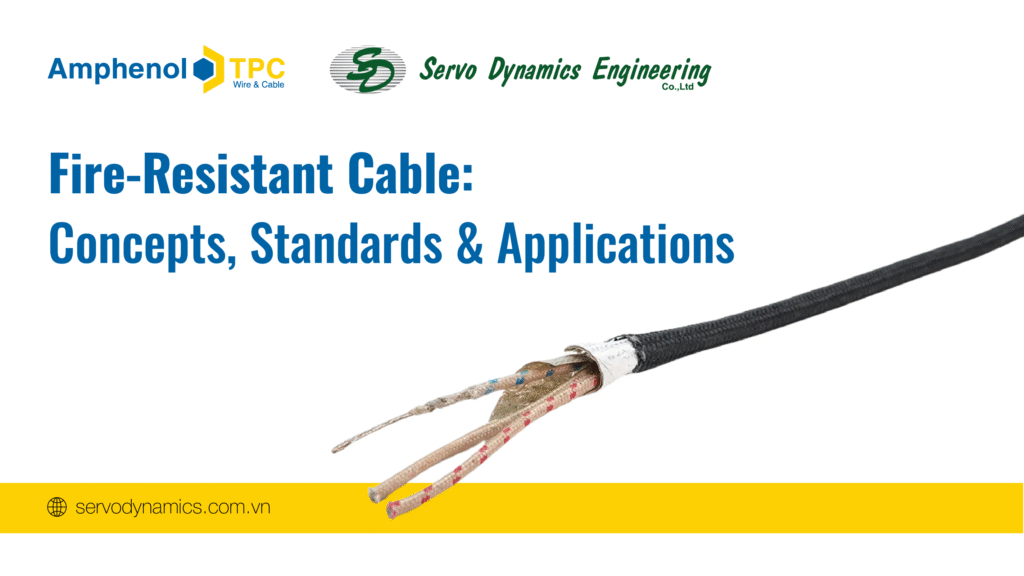
The fire-resistant cable is a vital component, playing a crucial role in the fire prevention and firefighting systems of every construction project, from civil to industrial. More than just transmitting power or signals, this special type of cable must ensure the ability of Circuit Integrity under fire conditions. This capability allows emergency equipment (such as escape lights, fire pumps, and ventilation fans) to continue operating during the critical time needed for evacuation, rescue, and fire control.
Concepts, Differentiation, and Detailed Structure
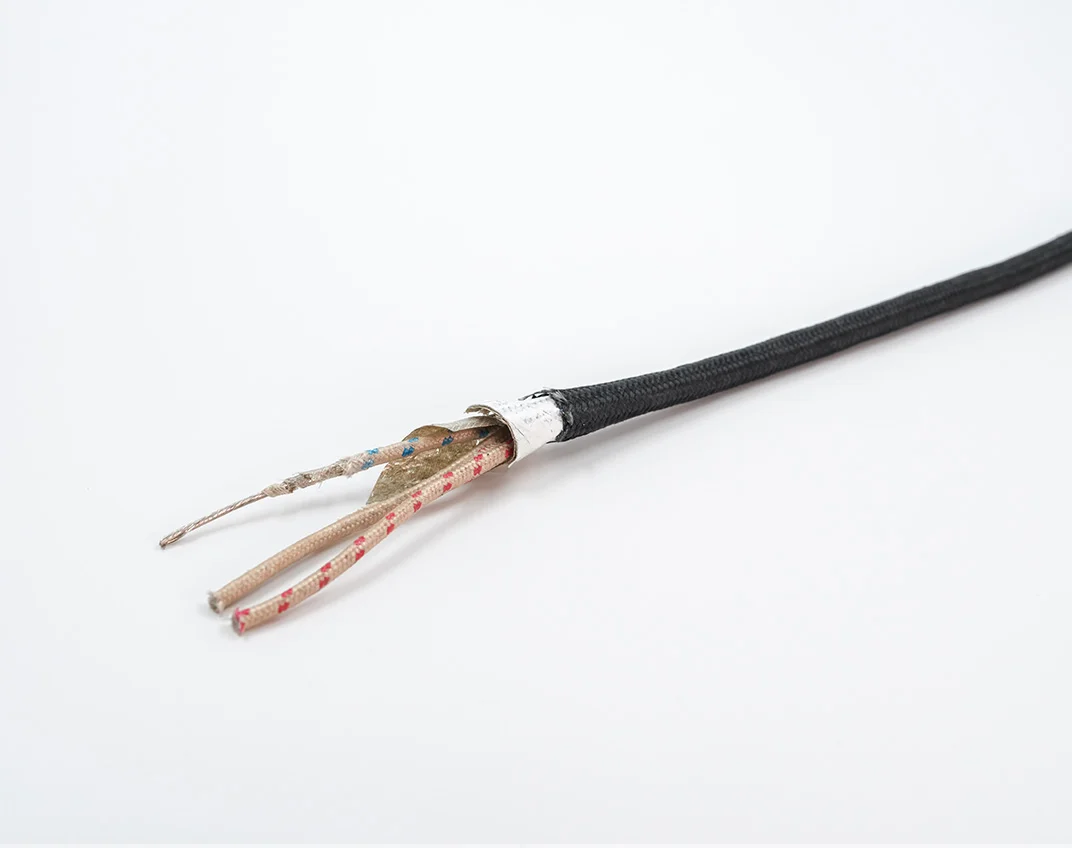
What is a Fire-Resistant Cable
A Fire Resistant Cable (FH) is a type of cable designed to withstand the direct impact of fire for a specified duration (usually 90, 120, or 180 minutes), while continuing to transmit power or signals without short-circuiting or open-circuiting. They are an indispensable link in life safety systems.
The main goal of fire-resistant cables is to ensure that fire prevention and firefighting, escape, and security systems remain operational during the golden time for rescue, firefighting, and evacuation, even if the cable’s outer sheath has been destroyed by fire.
Differentiate Between Flame Retardant (FR) and Fire Resistant (FH) Cables
These two concepts are often confused, but there is a significant difference in their intended use and testing standards:
| Feature | Flame Retardant (FR) Cable | Fire Resistant (FH) Cable |
| Purpose | Prevents the spread of flame along the cable length, helping to limit fire propagation. | Maintains operation (circuit integrity) during a fire, ensuring the emergency system is not cut off. |
| Main Standard | IEC 60332 (Flame propagation test). | IEC 60331 or BS 6387 (Circuit integrity test). |
| Core Feature | Self-extinguishes when the fire source is removed. | Withstands direct fire and continues to transmit power/signals. |
| Sheath Material | PVC (with flame-retardant additives) or LSZH. | Mandatory LSZH/LSHF (Low Smoke Halogen Free). |
In Summary: Flame Retardant cables help prevent risk, while Fire Resistant cables are designed to ensure emergency function during a fire.
Basic Structure of Fire-Resistant Cable
The structure of a fire-resistant cable is key to determining its heat resistance and circuit integrity capability:
- Conductor: Always pure copper to ensure stable conductivity and better heat resistance than other materials.
- Fire Barrier Layer: This is the most important material layer, typically Heat-Resistant Mica Tape. When exposed to high temperatures (above 800 degrees Celsius), the Mica tape forms a stable, insulating ceramic layer, protecting the conductor from short-circuiting even when the temperature exceeds 950 degrees Celsius.
- Insulation Layer: Often uses high-quality cross-linked Polyethylene (XLPE) or Ethylene Propylene Rubber (EPR), characterized by low smoke and non-toxic properties.
- Protective Layer (Armor/Screen): May include a screen layer for electromagnetic interference (EMI) protection or an armor layer made of steel/aluminum for enhanced mechanical protection (depending on the cable type).
- Outer Sheath: Mandatory LSZH (Low Smoke Zero Halogen) or LSHF material. This material ensures that when burned, the cable does not emit thick black smoke (improving visibility) and does not generate toxic halogen gases (HCl, HBr), reducing the risk of smoke inhalation and respiratory damage for evacuees.
Symbols and Identification
The symbols on the cable help identify the correct type and standard:
- FR (Fire Resistant) or FH (Fire Hazard): Fire resistance, circuit integrity capability.
- LSZH / LSHF: Low smoke and zero halogen characteristics.
- Standard Symbol: Clearly states the achieved standard (e.g., IEC 60331, BS 6387 C W Z).
- FMR (Fire-rated Mineral Reinforced): Symbol for mineral-insulated fire-resistant cable.
- Specification: Example: 4 x 4mm2 (0.6/1kV).
Applicable Standards and Regulations
The assessment of fire-resistant cables must be based on rigorous tests for fire resistance and circuit integrity.
National and International Standards
The most important standards that a quality fire-resistant cable product must achieve include:
| Standard | Scope | Detailed Description & Temperature |
| IEC 60331 | Global | Circuit Integrity Test when exposed to direct fire. The cable is tested at a minimum temperature of 750 degrees Celsius for 90 minutes (basic standard). |
| BS 6387 | UK/International | Most Comprehensive Test for circuit integrity when exposed to 3 factors: (C) Fire resistance only (maximum 950 degrees Celsius, 3 hours); (W) Fire and Water; (Z) Fire, Water, and Mechanical Shock. Achieving BS 6387 C W Z is the highest requirement. |
| IEC 60332 | Toàn cầu | Flame Retardant Test. Includes multiple parts (e.g., IEC 60332-1 for single core, IEC 60332-3 for bundled cables) to check the flame spread rate. |
| TCVN 9660 | Vietnam | Vietnam National Standard, often built upon international standards (IEC) and applied to domestic projects. |
Fire Resistance Duration (Circuit Integrity)
Circuit integrity is the time the cable remains operational under fire conditions. The time levels correspond to the importance of the construction:
- 90 Minutes (Minimum 750 degrees Celsius): The common level, often applied to fire alarm systems and emergency lighting in ordinary civil and commercial buildings. This is enough time for evacuation and initial firefighting deployment.
- 120 Minutes (2 Hours): Often required for large-scale, complex projects, or critical cable routes passing through multiple hazardous areas.
- 180 Minutes (3 Hours – Usually 950 degrees Celsius): The highest level, intended for areas of vital importance or difficult access (e.g., traffic tunnels, data centers, hospitals, skyscrapers) where power supply is required for the command center or smoke extraction fans to operate long-term.
Popular Types of Fire-Resistant Cables Today
Fire-resistant cables are classified based on their transmission function to suit specific applications in fire safety systems.
Classification by Function
Fire-Resistant Power Cables (Utility Cables)
This is the “bloodline” supplying power to high-power equipment.
- Application: Fire pumps, staircase pressurization fans, emergency smoke extraction fans (HAVC systems), fire elevators.
- Characteristics: Large cross-section, usually 3 or 4 cores.
Fire-Resistant Signal Cables (Data Transmission)
Transmitting information between smart devices.
- Application: Connecting smoke/heat detectors, alarms, sirens, and control modules back to the central fire alarm panel.
- Characteristics: Small cross-section (usually 1.5mm2 or 2.5mm2), requires high signal reliability.
Fire-Resistant Control Cables (Equipment Control)
Transmitting control commands from the center to actuating mechanisms.
- Application: Controlling the opening/closing of fire dampers, electronic escape doors, and devices in integrated fire safety BMS systems.
- Characteristics: Usually multi-core with small conductors.
Shielded Fire Alarm Cables (Anti-Interference)
A classification of signal cables with enhanced anti-interference capability.
- Characteristics: Mandatory shielded layer (Screened) made of aluminum or copper to protect the signal from electromagnetic interference (EMI), especially important in environments with many parallel power lines or near large radiation sources.
Classification by Specification (Cross-Section & Cores)
Cable specifications are designated in the format Number of Cores x Cross-Section (mm2). This is the core technical parameter, determining the current carrying capacity and nominal voltage of the cable. The selection of fire-resistant cable specifications must strictly adhere to technical calculations regarding current load, voltage drop, and safety coefficients according to current fire safety standards.
Common Specifications for Signal & Control Systems (Small Cross-Section)
This cable group has cross-sections from 1.5mm2 to 2.5mm2, primarily used for low-current circuits or signal transmission circuits. They typically have a voltage rating of 300/500V or 450/750V.
- Application: Very common for basic fire alarm/signal circuits, powering small-capacity emergency lighting, alarms, sirens, and connecting control modules.
- Typical Specifications:
- 2 x 1.5 (2 cores, 1.5mm2): Most common for 2-wire signal circuits and very small single-phase power supply circuits.
- 3 x 1.5, 4 x 1.5: Used for control circuits requiring a neutral wire, earth wire, or transmitting more types of signals.
- 2 x 2.5, 3 x 2.5, 4 x 2.5: Provides slightly higher current carrying capacity, often used for long circuit runs or powering equipment requiring greater voltage stability.
Common Specifications for Power Systems (Medium Cross-Section)
This cable group serves basic Power Distribution, typically with a voltage rating of 0.6/1kV. This is the most crucial segment, supplying power to medium-power fire safety equipment.
- Application: Main power supply for small control panels, power branches for large-scale emergency lighting systems, and smaller fan/pump motors.
- Typical Specifications:
- 3 x 4, 4 x 4: Often used for 3-phase or high-power 1-phase circuits, powering equipment < 5kW.
- 4 x 6, 4 x 10, 4 x 16: These specifications allow for larger current loads, suitable for powering critical dynamic equipment such as staircase pressurization fans, or fire water pumps with power ranging from 5kW to 20kW.
Specifications for Large Projects and Constructions (Large Cross-Section)
These are large cross-section fire-resistant power cables (utility cables), used for high current transmission in large-scale projects, usually 4-core cables.
- Application: Powering high-power equipment such as industrial fire pumps, large smoke extraction/ventilation fans, or connecting from the emergency substation to the main power distribution cabinets in the fire safety system.
- Typical Specifications:
- 4 x 25, 4 x 35: Serves high current loads for large-capacity motors.
- 4 x 50, 4 x 70 (and larger): Intended for extremely large projects and constructions, where current loads exceeding 100A are required, ensuring stable power supply for the entire emergency system under fire conditions.
Leading Fire-Resistant Cable Brands
The reliability of fire-resistant cables largely depends on the brand’s manufacturing technology.
Top 5 Popular Fire-Resistant Cable Brands in Vietnam
TPC Fire-Resistant Cable (Premium American Brand)
TPC is a specialized brand, known for products designed for harsh environments. TPC cables often meet high international standards such as UL (USA), FM (Global), and BS 6387 C W Z.
- Outstanding Features: High resistance to chemicals, abrasion, and mechanical durability, ideal for mines, tunnels, and heavy industrial zones.
- Reference: Products in the same high-end segment such as Belden fire-resistant cable (specializing in signal and data cables) are also a top choice for systems requiring absolute durability and anti-interference capability.
Cadivi Fire-Resistant Cable
Cadivi is a national brand, recognized for quality and reliability. Cadivi fire-resistant cable has a large advantage in price and availability in the market.
- Pros: Reasonable price, good compliance with TCVN and basic IEC standards, high brand recognition.
- Cons: The specialized product line for super-harsh environments is less diverse than specialized manufacturers.
Cadisun Fire-Resistant Cable
Cadisun fire-resistant cable provides a balanced solution between price and quality, serving well for commercial and civil projects that need cost optimization.
- Pros: Diverse specifications, competitive price, easy to choose.
- Cons: Must carefully check the BS 6387 C W Z certificate for high-end project requirements.
LS, Benka, and Alantek Fire-Resistant Cables (Other Common Brands)
- LS Fire-Resistant Cable (South Korea): Consistent quality, often used in large South Korean projects in Vietnam.
- Benka Fire-Resistant Cable (Singapore): Known for fire-resistant and medium-voltage cable solutions.
- Alantek Fire-Resistant Cable (USA): Specializing in signal cables, Alantek fire-resistant cable is favored for fire alarm systems and data networks requiring high anti-interference capability.
Guidance on Selection and Installation
Correct selection and installation are the two factors determining the safety and efficiency of the fire safety system.
Important Technical Criteria When Selecting Fire-Resistant Cable
Number of Cores and Cross-Section
Reaffirm that choosing 3 x 1.5 fire-resistant cable (3 cores, 1.5mm2) or 4 x 4 fire-resistant cable (4 cores, 4mm2) must be based on accurate current calculations (voltage drop, starting current) to ensure the cable is not overloaded, causing a short circuit before the fire-resistant layer can function.
Material, Conductor Structure, and Voltage Rating
- Conductor Material: Mandatory Copper.
- Conductor Structure: Stranded cable usually has higher flexibility, easier to install than Solid cable, but both can be used.
- Voltage Rating Criterion: The nominal voltage of the cable (e.g., 0.6/1kV) must be higher than the maximum voltage of the system being used to ensure insulation safety.
Fire Resistance/Insulation Characteristics (FMR and Specialized Materials)
- Mica Tape: Confirms this material is capable of withstanding temperatures up to 1000 degrees Celsius.
- FMR (Fire-rated Mineral Reinforced/Mineral-insulated cable): This is the highest-grade cable technology, using Magnesium Oxide (MgO) as the insulating material and a copper/stainless steel sheath. This cable type offers superior fire resistance (often over 3 hours), excellent water resistance, and mechanical shock resistance, ideal for extremely hazardous areas.
Application, Installation, and Accompanying Accessories
Practical Applications
Detailing the applications that must maintain operation:
- Fire Alarm & Emergency Communication Systems: Ensuring alarms, sirens, and internal communication systems operate.
- Emergency Exit Lights & Emergency Lighting: Ensuring visibility during evacuation.
- Emergency Ventilation Systems: Maintaining smoke extraction fans and staircase pressurization fans to prevent smoke spread and create an escape route.
- Fire Pump Systems: Continuous power supply for fire water pumps.
Accessories and Installation Methods
Incorrect installation can compromise the fire resistance of the cable:
- Fire-Resistant Cable Trays: Mandatory use of fire-rated cable support systems. Do not use plastic or flammable supports.
- Fire Stop/Fire Wrap: This is a mandatory requirement when cables penetrate fire-rated walls, floors, or partitions. Fire-resistant cable trays and fire stop wraps (sealant, padding) prevent fire and smoke from spreading from one area to another via the cable path.
- Installation: Cables must be clamped and suspended using heat-resistant metal clamps (usually stainless steel) and must be periodically inspected.
Servo Dynamics Engineering: Authorized Distributor of TPC.
Servo Dynamics Engineering is proud to be the authorized distributor of TPC – a premium fire-resistant cable brand from the USA. We are committed to providing high-quality fire-resistant cable products that meet the strictest international standards (BS 6387 C W Z, UL, FM), along with specialized technical support to ensure your fire safety system operates safely and efficiently, meeting all demanding technical requirements of your project.